Showing posts with label Travel. Show all posts

Friday, 30 June 2017

7 Less Crowded Nearby Alternatives To Popular Hill Stations In India

7 More Beautiful And Less Crowded Nearby Alternatives To Popular Hill Stations In India

7 More Beautiful And Less Crowded Nearby Alternatives To Popular Hill Stations In India
Originally Published On
Tripoto | 1 day ago
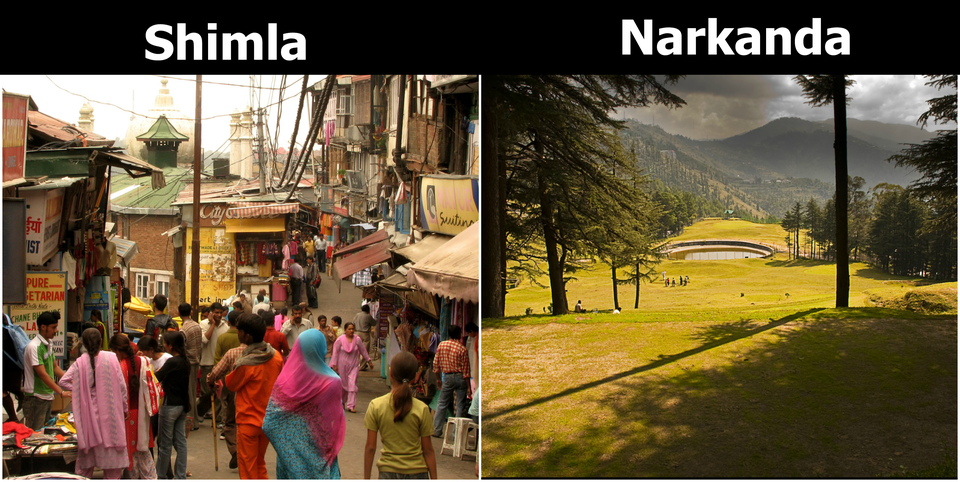
Narkanda is just 60km ahead of Shimla!

Isn't it completely frustrating when weeks of planning and hours of travelling lands you at a place which is even more crowded than your hometown? It happens a lot more often these days since everyone tends to travel to the same tried and tested hill stations during vacations. What entails is hordes of smoke-spewing vehicles concentrated on a small land area polluting the serenity and atmosphere of an erstwhile pure hill station. This and traffic jams, time wastage and the booking out of good hotels at these destinations.

In order to do away with your worries and actually go on a vacation, you can easily take a detour to visit their more beautiful and less crowded alternatives instead. I've listed down the top seven options in our country with the best properties to stay in, below:
1. Narkanda, instead of Shimla
Credits:
Airbnb

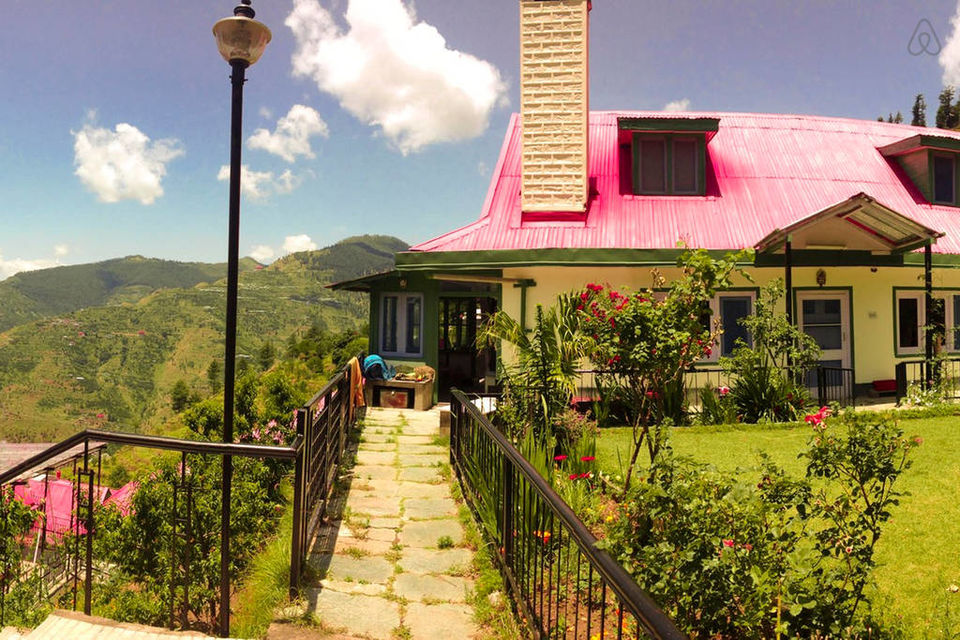
Being the most popular hill station in India has its disadvantages. Shimla is full of people, irrespective of the time of the year. Hence, Narkanda, nearby is a terrific option if you wish to stay in the Himalayas of Himachal, without being disturbed by the hustle & bustle of Shimla.
Himalayan Orchard Farm Stay is a gorgeous apple orchard house located in Narkanda, which can host up to 11 people. It's perfect for couples and small families looking for a quiet time away. You can book it right away for the upcoming weekend.

Price per night for 2: Rs. 5,168

Distance & time from Shimla: 62.8km, 1 hour 56 mins

2. Barog, instead of Kasauli
Credits:
Airbnb

The last time I travelled to Kasauli from Delhi, it took me more than nine hours to reach the "closest hill station to the capital". That's when I took a pledge to never visit this place on the weekend. What I ended up discovering though was a beautiful little hill station called Barog nearby that had all the charms of Kasauli, if not more. I would strongly suggest staying at the majestic
Rambling Rose, which is a secluded cottage off the Kalka-Shimla highway. The stay provides stunning panoramic views of the Himalayas and is absolutely perfect for a weekend getaway. You should book it in advance because it's always in high demand.

Price per night for 2: Rs. 4,638
Distance & time from Kasauli: 17.7km, 43 mins

3. Chail, instead of Kufri
Credits:
Airbnb

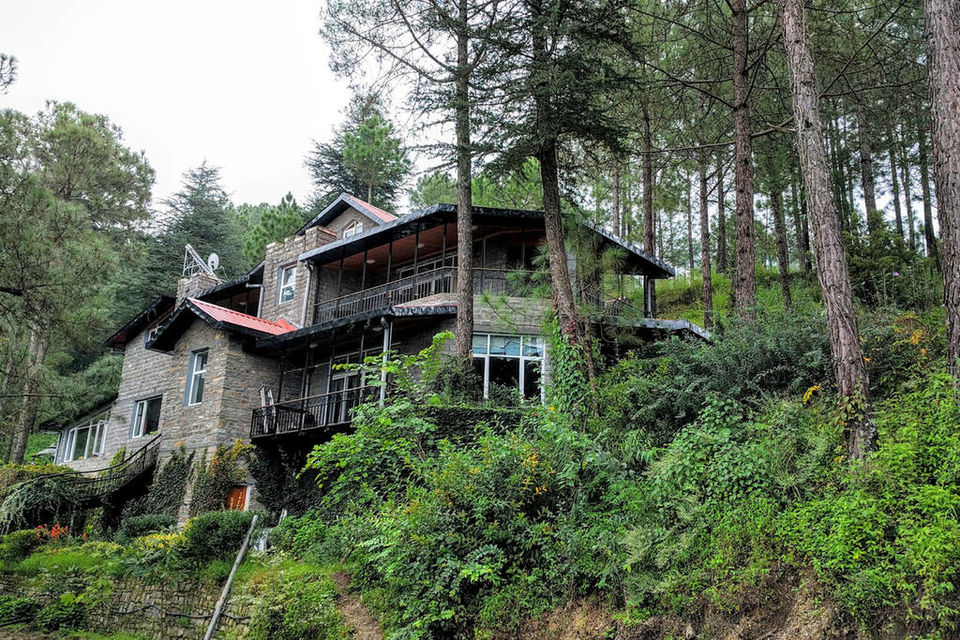
Widely known as the alternative to Shimla, Kufri has slowly become just like the former thanks to overcrowded lanes and lack of good hotels around the area. So what I recommend is driving another hour and staying in quaint Chail instead. The magnificent
Villa Ekam there is a destination in itself because it is constructed over a slope that oversees a sea of pine, deodar and apricot trees before the next human civilisation can be seen. This stay can host a huge gang of up to 14 people and is equipped sufficiently in terms of food and breathtaking scenery so you won't need to worry about anything else while here. If you're looking for a vacation full of tranquility, book this villa before anyone else does!

Price per night for 2: Rs. 34,000
Distance & time from Kufri: 31.8km, 1 hour 8 mins

4. Ramgarh, instead of Nainital
Credits:
Booking

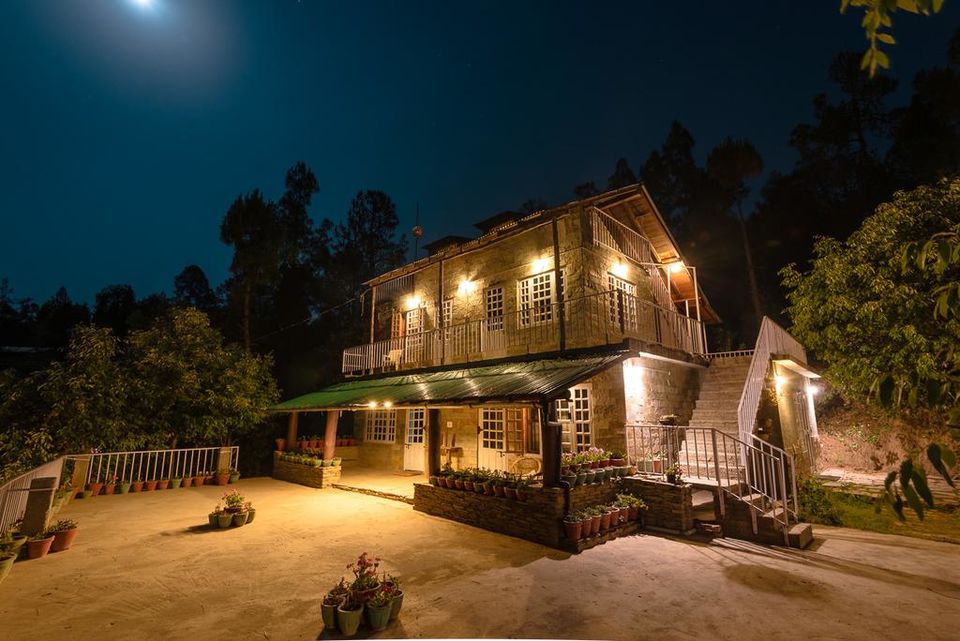
What a beautiful hill station Nainital is! And what a pity that one never finds it quiet enough to enjoy its beauty nowadays. If you wish to avoid the long queues in Nainital, drive down to the dreamy little town of Ramgarh instead, which is just an hour away. The ravishing
Frozen Woods promises you a stay like nowhere else since it is actually located in the middle of nowhere! Book a stay at this cabin in the woods for the upcoming weekend.

Price per night for 2: Rs. 3,060
Distance & time from Nainital: 35.1km, 1 hour 10 mins

5. Palampur, instead of Dharamsala
Credits:
Airbnb

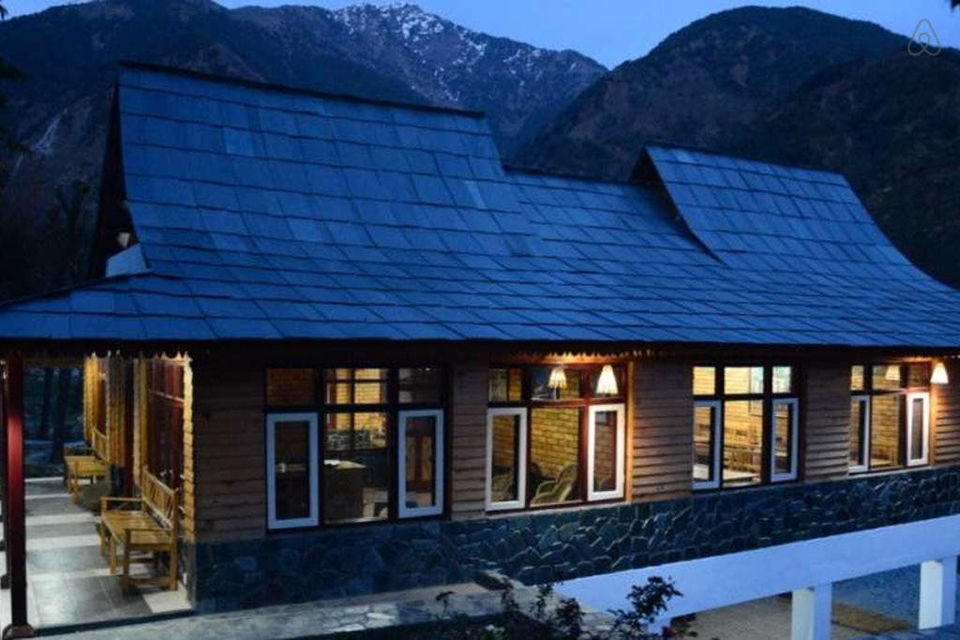
Cometh the weekend and all pseudo-hippies run off to either McLeod Ganj, Dharamsala or Triund in the hope of attaining some sort of nirvana. These three places are filled up to the brim and hence the only wise decision is to go to the nearby Palampur village instead, which is blessed with enviable natural scenary and old world charm. What will heighten your experience is staying at the
Barot Cottage, which puts together the best of both primitive as well as modern times by being a fully-equipped modern resort in the guise of a village cottage. It's one of the most stunning places you'll ever stay at, and hence you must book it right now!

Price per night for 2: Rs. 6,185
Distance & time from Dharamsala: 35.8km, 1 hr 8 mins

6. Coonoor, instead of Ooty
Credits:
Airbnb

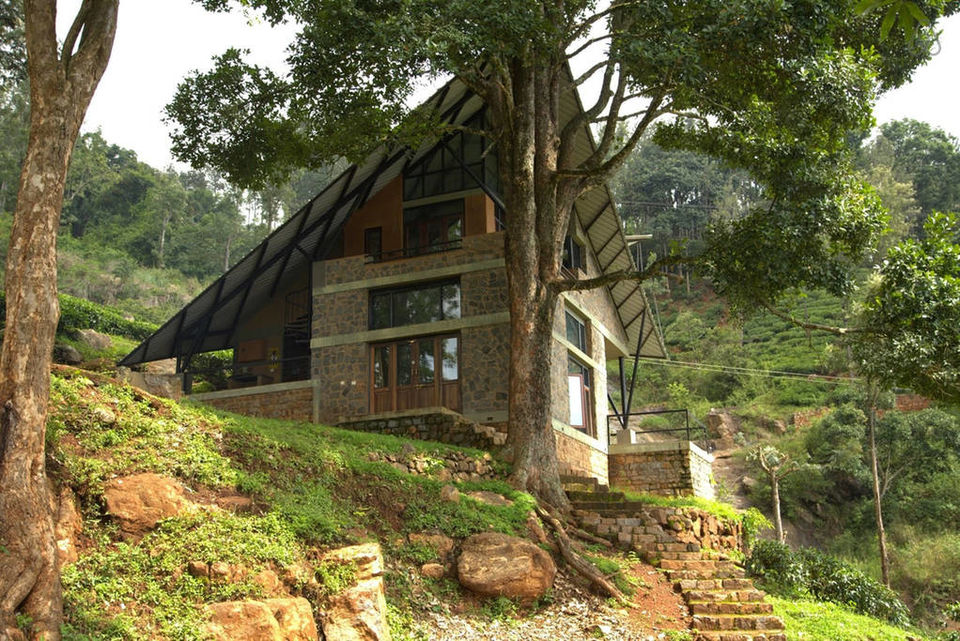
Whenever you ask any IT professional working down south about his weekend plans, they will most probably tell you that they're going to visit Ooty as it's the most popular hill station in the region. And when you visit Ooty, you see tens of thousands of other frustrated IT professionals cramped up there as well. To prevent more frustration by such visuals, you should opt to stay in Coonoor instead, which is surprisingly less than an hour away.
O'Land Plantation is quite simply the best stay in the whole of Coonoor. It's an internationally-acclaimed tea & coffee plantation which doubles up as a mammoth estate welcoming guests that want out-of-the-box vacations. Being 120-acres large, the beautiful O'Land will ensure that you will never have to step out of the property for any aesthetic and worldly satisfaction. Book it now to experience the good life out of your cubicle.

Price per night for 2: Rs. 4,638
Distance & time from Ooty: 20.7km, 46 mins

7. Chamba, instead of Dalhousie
Credits:
Booking

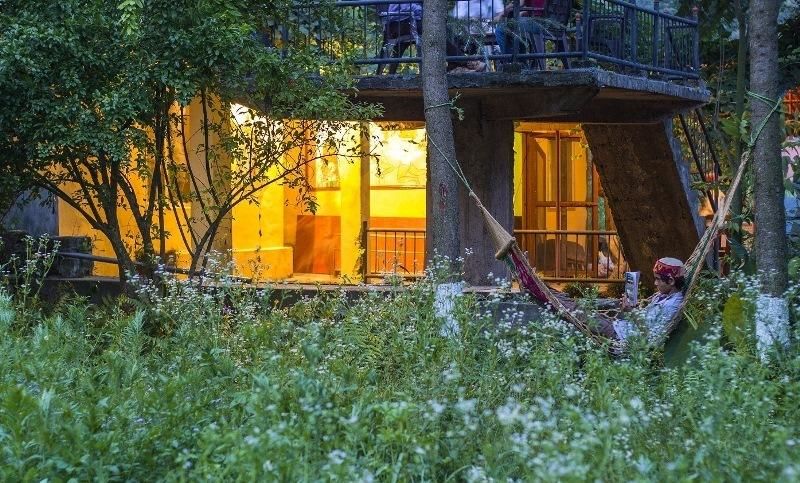
Finally, my personal favourite stay from amongst all others listed. And it helps that it is situated in the verdant surroundings of Chamba. Since Dalhousie is extremely popular amongst honeymooning couples, it's always full of them. If you really wish to have the time of your life with your beloved,
book a stay at the magical H2O House in Chamba. It's a sublime self-sustaining property which is constructed by a pristine river whose perennially mellifluous sound always reminds you that there's nothing to worry about while you're there. Visit it to believe it.

Price per night for 2: Rs. 3,000
Distance & time from Dalhousie: 53.4 km, 1 hour 48 mins

So on your next mountain vacation, think out of the ordinary and go the extra mile to reap sweeter fruits. If you've already been to any of the above-mentioned destinations, do
share us your unique experience on Tripoto to make the other 25 million travellers in the community believe that there is ample beauty beyond the beaten paths.

Wednesday, 25 May 2016

10 World’s Most Livable Cities 2015

10 World’s Most Livable Cities 2015


Great job opportunities, efficient health care, well-organized public services, good environment and world-class education system make any city livable. Unfortunately, not all the world’s cities are livable. The Economist Intelligence Unit (EIU) announced the winners of this year. According to the 2015 Global Liveability Ranking, there are 11 most livable cities in the world, but since there’s no sixth, and two cities are tied for tenth, it’s the top 10 list. The ranking considers 30 factors concerning infrastructure, stability, health care, education and environment in 140 cities. Surprisingly, no American city makes the top. Australia and Canada are absolute winners.

1. Melbourne, Australia


Melbourne has been ranked the most livable city in the world for the fifth year in a row. The city has low crime rate, great infrastructure and almost perfect living conditions. Moreover, it has one of the most harmonious and culturally diverse communities in the world. People from over 140 nations call Melbourne their homeland or simply choose to live here. With its 10 internationally recognized universities, Melbourne provides world-class education. Melbourne is also a global art city with a great number of incredible galleries and museums. The city provides world-class health care services, which are free for locals and people with permanent visa.

2. Vienna, Austria


When it comes to any ranking, Vienna is almost always included. The list of the world’s most livable cities is no exception.

Vienna is known for its low crime rate, stable political system, well-developed economy, excellent infrastructure, rich history, diverse culture, and moderate climate. The city offers highly efficient and affordable education system and a top-notch health care.

3. Vancouver, Canada


The green city of Vancouver is a dream city for anyone who appreciates the high quality of life. Situated in the West coast of Canada, Vancouver is a clean city that boasts breathtaking natural beauty.

The city has very low crime rate, no corruption, strong economy, high quality education and health care. Vancouver offers great job opportunities, making it one of the best cities to live and work. The Simon Fraser University and University of British Columbia are two major universities that attract many international students from different parts of the globe. Vancouver is attempting to become the greenest city in the world by 2020.

4. Toronto, Canada


Another Canadian city that offers a great work-life balance, strong economy, awesome environment, free medical care services provided by the Ontario Health Insurance Plan, and exquisite culture life. Toronto is rather a safe city.

It’s crime rate is extremely low and the public transport service is well-developed. With regular music concerts, comedies and drama in the streets, you will never feel bored when visiting or living in Toronto.

5. Calgary, Canada


Yep, you read that right. Canada and Australia dominate.

The clean, wealthy, beautiful and safe city of Calgary is definitely one of the world’s most livable cities. The cost of living is very low while the salary is relatively high. The city has no sales tax and overall low taxes, which is why the home ownership rate is high. Calgary provides world class education system and health care services, as well as eco-friendly transportation system.

6. Adelaide, Australia


Since there’s no 6, Adelaide also takes fifth place in the list of the most livable cities in the world 2015. This coastal, peaceful, clean and rich city has a low cost of living, affordable health care services, and high quality education system.

Adelaide is known for its fabulous beaches, spectacular parks, impressive architecture, beautifully unique museums, fun music bars and top-flight restaurants. With 14 bike hire stations, Adelaide offers free bikes for hire all throughout the city. I think, it’s a great way to prevent air pollution.

7. Sydney, Australia


Sydney is one of the best cities for better quality of life and is also one of the world’s most livable cities. Just like Vienna, Sydney is almost always included in most positive rankings.

Sydney is a top business destination that offers plenty of job opportunities, world class health care, research child care centers and high quality education system. Due to its amazingly friendly environment, the city is perfect for family life. There are many things to do and to see in Sydney. Shortly, this is a must-visit place.

8. Perth, Australia


Again, Australia. This list makes me believe that Australia is the perfect place to live and work.

The world’s most isolated capital city, Perth provides world-class education system and health care, great infrastructure, high employment rate and high salary. The city boasts captivating beaches and offers lots of fun outdoor activities.

9. Auckland, New Zealand


New Zealand also has one of the most livable cities in the world. Auckland boasts a powerful economy, high quality lifestyle, a host of business opportunities, affordable and high quality education system, free healthcare services, and breathtaking environments.

10. Helsinki, Finland


Finally, Finland! Apart from Canadian and Australian cities, Helsinki is another incredible city for happy living. With its high standard of living, friendly locals, one of the world’s best education systems, high quality health care system, and strict environmental laws, Helsinki deserves to be on the list of the world’s most livable cities. The statistics show that people live longer in Helsinki. Zurich is another city that takes the tenth place, read on…

11. Zurich, Switzerland


The largest and most popular city in Switzerland, Zurich is a safe and beautiful place to live and work. The crime rate is very low. Food, health care, and education are top quality. With very low tax rates, Zurich is well known for its lucrative financial centers. Apart from economy, the city boasts a great number of places to see and things to do. Although Zurich can’t match London and Milan, it’s also a fabulous shopping city.

Sunday, 24 January 2016

Indian Hotel Is No. 1 in the World

This Indian Hotel Is No. 1 in the World Say TripAdvisor Users – Take a Look Around

Umaid Bhawan Palace in Jodhpur seen in November 2014 has been voted as No. 1 hotel in the world by TripAdvisor. Jaideep Oberoi

A hotel in Jodhpur, the Indian city in Rajasthan known for its chalky-blue buildings, has won the traveler’s choice award for 2015 from TripAdvisor, a customer review website. Umaid Bhawan Palace, an imposing, art-deco inspired structure built between 1928 and 1943, is still in part the main home to the maharaja of Jodhpur and his family.
Taj Hotels Resorts and Palaces

Guests have access to the rest of the palace, including indoor and outdoor swimming pools, a spa and marbled-squash courts. The palace, which has a 105 foot high cupola, or dome, has 347 rooms and was built to provide employment to local people at a time when the area was hit by famine and drought.
The bedroom in the Royal Suite at Umaid Bhawan Palace in Jodhpur seen in November 2014. Jaideep Oberoi

The hotel, part of the Taj Hotels Resorts and Palaces, has 64 bedrooms and suites including one with a private spa and the average price for a night’s stay is $734. Supermodel Naomi Campbell stayed at the palace in November 2012 when she hosted a party at the nearby Jodhpur Fort. More than 750 comments on TripAdvisor described the hotel as “Excellent.”
Advertisement

The Maharani suite’s private spa at the Umaid Bhawan Palace in Jodhpur seen in November 2014. Jaideep Oberoi

A recent guest from California who reviewed the palace on TripAdvisor wrote: “We stayed in magnificent properties throughout India, but this was the best of all!” However, reviews were not universally eulogistic. Ten out of 839 ratings of the hotel on TripAdvisor described it as “Terrible.”
The Zodiac Pool at the Umaid Bhawan Palace. Taj Hotels Resorts and Palaces

“It is a Great Palace with beautiful grounds, a great room and nothing more than that. The people are awful. You will not find a friendly face except at the royal welcome and that is it,” wrote a reviewer from Cleveland Ohio who visited in 2012. A spokesperson for the hotel wasn’t immediately available for comment.
The outdoor pool at Umaid Bhawan Palace. Taj Hotels Resorts and Palaces

Monday, 7 September 2015

A Czech Village Worth Rhapsodizing About


Not Far From Prague, a Czech Village Worth Rhapsodizing About

The frozen-in-time town of Český Krumlov has scenery and history—and beer—that keeps travelers coming back

A view of Český Krumlov's old town and the Vltava River.
1 of 10fullscreen
A pint glass of Budweiser Budvar. ROGER TOLL FOR THE WALL STREET JOURNAL
A view of Český Krumlov's old town and the Vltava River. ROGER TOLL FOR THE WALL STREET JOURNAL
The castle of Český Krumlov, built by the lords of the House of Rozmberk, sprawls along a cliff top above the Vltava River and the historical center of the town. The tower on the right is the former church of St. Jost, today the Marionette Museum, and the tower to its left is part of the castle and above the Castle Museum. ROGER TOLL FOR THE WALL STREET JOURNAL
The Český Krumlov castle at night. ROGER TOLL FOR THE WALL STREET JOURNAL
Visitors settle onto park benches in the central square of Český Krumlov. ROGER TOLL FOR THE WALL STREET JOURNAL
Graffiti on the side of a building in the historic center of Český Krumlov, a local artist's commentary on the tourist passion for selfies. ROGER TOLL FOR THE WALL STREET JOURNAL
A medieval-style painted sign in Český Krumlov including the logo of the brewery that makes the beer served. ROGER TOLL FOR THE WALL STREET JOURNAL
Many Czech cafes, bars and restaurant have exclusive relationships with breweries. Here a restaurant advertises that it serves Budweiser Budvar. ROGER TOLL FOR THE WALL STREET JOURNAL
The copper kilns at Budweiser Budvar are used for the malting, mashing and brewing of the beer. ROGER TOLL FOR THE WALL STREET JOURNAL
Three out of four beer taps in this Cesky Krumlov bar are dedicated to Czech Republic's Budweiser beer. ROGER TOLL FOR THE WALL STREET JOURNAL
A pint glass of Budweiser Budvar. ROGER TOLL FOR THE WALL STREET JOURNAL
A view of Český Krumlov's old town and the Vltava River. ROGER TOLL FOR THE WALL STREET JOURNAL
AFTER A DAY of walking the cobblestone streets of Český Krumlov, a medieval town in the Czech Republic just north of the Austrian border, my wife and I agreed that a beer was in order.
“Bring us something cold and local,” I asked the waiter at the cafe where we’d taken seats at a table outside. Czechs are proud of their beers: They guzzle them with gusto, consuming 30% more per person than Austrians or Germans, the two runners-up in the list of big beer drinking countries (Czechs drink twice as much as the relatively abstemious Americans). So I was eager to sample some of the local suds. When he returned, the waiter was carrying two tall glasses emblazoned with a red-lettered swoosh and the logo, Budweiser.
We came all this way for a Bud?
“Sorry, but we wanted a Czech beer,” I said before the waiter could get away.
“That is a Czech beer,” he replied. “Try it. You’ll like it.”
I liked it very much. It was full-bodied with a nice tang of hops; hefty but not heavy. “Where is it made?” I asked as he passed by our sidewalk table again. Just a half-hour away, it turned out. My curiosity was piqued. How was this Budweiser related to the one with the same name and a similar logo that’s served in bars all across America? I added the question to my already lengthy list of things we wanted to explore in this surprising place.
Český Krumlov is located 15 miles north of the Austrian border in the western Czech region of Bohemia. It was part of Sudetenland, a historically German region that was incorporated into Czechoslovakia at the end of World War I and annexed by Hitler after he swept up Austria in 1938. Ten years later, it fell into the shadow of the Iron Curtain and was left to rot from neglect by the Soviet-managed Czechoslovakian government.
The restored Renaissance plasterwork facade of restaurant Jakub, in the Krcinuv Dum HotelENLARGE
The restored Renaissance plasterwork facade of restaurant Jakub, in the Krcinuv Dum Hotel PHOTO: ROGER TOLL FOR THE WALL STREET JOURNAL
The town’s fortunes have certainly reversed in the 25 years since the Velvet Revolution. Today, it is the Czech Republic’s second most visited destination, a fairy-tale pretty town of 14,000, cradled below forested hills and straddling the Vltava River, which carves swooping esses through the historic center. No fairy tale would be complete without a castle, and Český Krumlov’s, which served as the seat of the House of Rožmberk (Rosenberg in English) from the mid-1200s to the 1600s, doesn’t disappoint.
“In those feudal days, the family owned the land, they owned the people and they governed the Kingdom of Bohemia as deputy kings,” our guide told us as we toured the main castle building, just a small part of the 40 Rennaissance and Baroque structures that comprise the entire complex. “They wanted their home to be as impressive, and nearly as large, as the king’s castle in Prague.”
They certainly succeeded at impressing. The ruling family’s vast wealth enabled them to hire the finest Italian and Dutch craftsmen to build and decorate their home, whose theater, added in the 17th century, is one of only two remaining Baroque theaters in Europe (the other is in Sweden). Its ceiling and walls are covered with elegant murals by two Viennese painters, and the complex mechanical systems that were used to move scenery and create special effects like wind and rain are especially interesting.
I had never heard of the House of Rožmberk, and had barely heard of Bohemia. I felt I was in a new world, just a bit further east of the Europe I know well yet as unknown to me as medieval China.
The town was a bustling center of trade, philosophy and science in medieval days, which is easy to imagine while walking along the cobblestone lanes among Gothic, Renaissance and Baroque buildings—not a straight line in sight.
The next day, my wife and I ordered two more glasses of what was fast becoming our favorite beer in the cafe at the Egon Schiele Art Centrum. Set in a former brewery, the arts complex features works by Mr. Schiele, the bad-boy Viennese artist who scandalized the town when he and his mistress/model lived in the building for a year in 1911. He spent hours painting her as she posed nude in their garden, which apparently was less than private. The couple was forced to abandon their Eden in the wake of communal indignation.
We struck up a conversation with Ivo Janousek and Jan Palkovic, graduate students who grew up in Český Krumlov and who told us about the years behind the Iron Curtain.
Local lagers on tapENLARGE
Local lagers on tap PHOTO: ROGER TOLL
“No money was coming from the government, so the town remained as it had always been, in a sort of deep freeze,” Mr. Palkovic said, explaining the absence of the bland and ugly modern buildings so commonly seen in former Eastern Bloc countries. With the Velvet Revolution, he said, everything changed. “Suddenly there was a future. People responded in a spontaneous burst of restoration and conservation work. There was no state funding at first,” Mr. Palkovic said. “The people of the town did it because it had to be done. It’s our inheritance, so a lot of people got involved.”
‘Bad boy Egon Schiele spent hours painting his nude mistress in the garden here.’
“What Český Krumlov was in the 1500s is present in the town of today,” Mr. Janousek said. “After the peak of activity here in the late 1500s, the place went to sleep, you might say. Now it has reawakened, but this time it is opening up to a much wider world. Český Krumlov is alive because of tourism.”
Indeed, the town’s setting along the Vltava and beneath forested hillsides makes it a popular spot for both kayakers and hikers, who arrive in the spring and stay through the end of fall. Český Krumlov’s castle and other historic buildings have earned it numerous recognitions; it was designated as a Unesco World Heritage site in 2002.
The next day, hoping to solve the mystery of the “other” Budweiser, we drove 10 miles to České Budějovice, a small city of about 90,000. České Budějovice is the commercial and political capital of South Bohemia and has been a center for beer production since the 13th century. Its first large brewery, Bürgerliches Brauhaus Budweis, was founded in 1795 by the German-speaking population. A century later, in 1896, the city’s marginalized Czech-speaking populace launched its own brewery, Budweiser Budvar, which is where the beer our waiter introduced us to is made.
ENLARGE
We took a tour of the Budweiser Budvar brewery, which included a look at the massive, copper fermenting vessels in the brewhouse and a sampling of the wares. Our guide cleared up at least part of our Budweiser confusion when she explained that the name Budweiser can indicate both a beer made in Budějovice (Budweis, in German) or a beer brewed in the same style as the pale lagers of Budějovice (as the American Budweiser is).
Anheuser-Busch’s Budweiser hit the market in 1876, 20 years before the first bottle of Budweiser Budvar was sold. Shortly after the Czech Budweiser appeared, ownership of the name became a legally fraught issue that continues today. Budweiser Budvar is sold in most of the world under that name. But in Canada, the U.S. and some of Latin America it is sold as Czechvar. Similarly, in much of Europe, Anheuser-Busch’s Budweiser is sold simply as “Bud.”
The deep caramel-colored quaff we were served on our first evening in Bohemia was just one of many happy discoveries we made during our two days in southern Bohemia. Another was that whenever we have a taste for that local brew back home, we can always crack open a Czechvar, which, no matter what you call it, will always taste to us like Český Krumlov.

THE LOWDOWN // EXPLORING SOUTHERN BOHEMIA’S BEER COUNTRY

Getting There: The easiest and most scenic way to reach Český Krumlov is by car. It is about a 3-hour drive from Prague or Vienna and about a 4-hour drive from Munich. The roads through South Bohemia are excellent.
Staying There: Hotel Ruze, a 16th-century palace with castle views, is the only 5-star hotel in town (from $150 per night, english.janhotels.cz). Sister hotels Krcinuv Dum and Latrán are also fine choices. Each has modern furnishings and a lot of Old-World charm. The suites are especially nice (from $90 per night, hotely-krumlov.cz/en). Castle View Apartments, just off the central square, has two roomy apartments for spreading out during extended stays (from $100 per night, castleview.cz/en).
Eating There: You can’t go wrong with fine restaurants Le Jardin, in the Hotel Bellevue(bellevuehotelkrumlov.cz), or Jakub (jakubrestaurant.cz/en), which serve traditional Czech fare and Continental fare. The popular U dwau Maryi (At Two Marys) is a fun place to have lunch at riverside tables in the shadow of the castle walls (2marie.cz). If visiting České Budějovice, don’t miss a meal at Masny Kramy, located in a 16th-century former meat market; the steaks are appropriately superb (masne-kramy.cz/en#home).