Tuesday, 14 February 2023
AirIndia's order for 220 Boeing planes will be providing 1 million jobs to US nationals
Sunday, 8 January 2023
Radiocarbon dating need not be accurate
phys.org /news/2018-06-cornell-illuminates-inaccuracies-radiocarbon-dating.html
Research illuminates inaccuracies in radiocarbon dating
Daniel Aloi5-6 minutes 05/06/2018

Radiocarbon dating is a key tool archaeologists use to determine the age of plants and objects made with organic material. But new research shows that commonly accepted radiocarbon dating standards can miss the mark—calling into question historical timelines.
Archaeologist Sturt Manning and colleagues have revealed variations in the radiocarbon cycle at certain periods of time, affecting frequently cited standards used in archaeological and historical research relevant to the southern Levant region, which includes Israel, southern Jordan and Egypt. These variations, or offsets, of up to 20 years in the calibration of precise radiocarbon dating could be related to climatic conditions.
Manning, professor of archaeology at Cornell University and director of the Cornell Tree-Ring Laboratory, is the lead author of "Fluctuating Radiocarbon Offsets Observed in the Southern Levant and Implications for Archaeological Chronology Debates," published in the Proceedings of the National Academy of Sciences.
Pre-modern radiocarbon chronologies rely on standardized Northern and Southern Hemisphere calibration curves to obtain calendar dates from organic material. These standard calibration curves assume that at any given time radiocarbon levels are similar and stable everywhere across each hemisphere.

The Cornell-led team questioned those assumptions.
"We went looking to test the assumption behind the whole field of radiocarbon dating," Manning said. "We know from atmospheric measurements over the last 50 years that radiocarbon levels vary through the year, and we also know that plants typically grow at different times in different parts of the Northern Hemisphere. So we wondered whether the radiocarbon levels relevant to dating organic material might also vary for different areas and whether this might affect archaeological dating."
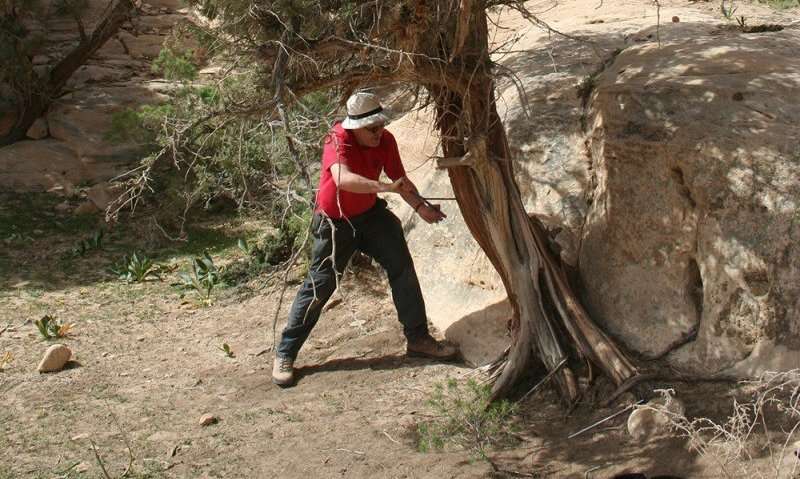
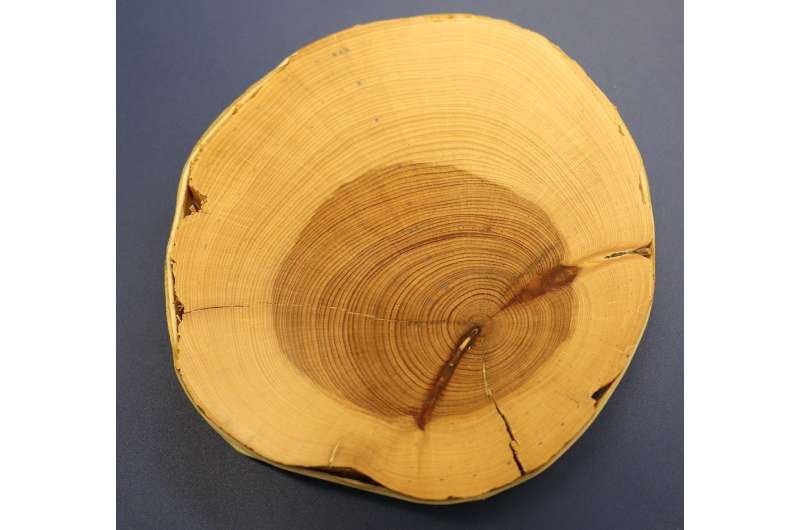
The authors measured a series of carbon-14 ages in southern Jordan tree rings, with established calendar dates between 1610 and 1940 A.D. They found that contemporary plant material growing in the southern Levant shows an average offset in radiocarbon age of about 19 years compared the current Northern Hemisphere standard calibration curve.
Manning noted that "scholars working on the early Iron Age and Biblical chronology in Jordan and Israel are doing sophisticated projects with radiocarbon age analysis, which argue for very precise findings. This then becomes the timeline of history. But our work indicates that it's arguable their fundamental basis is faulty—they are using a calibration curve that is not accurate for this region."

Applying their results to previously published chronologies, the researchers show how even the relatively small offsets they observe can shift calendar dates by enough to alter ongoing archaeological, historical and paleoclimate debates.
"There has been much debate for several decades among scholars arguing for different chronologies sometimes only decades to a century apart—each with major historical implications. And yet these studies ... may all be inaccurate since they are using the wrong radiocarbon information," Manning said.
"Our work," he added, "should prompt a round of revisions and rethinking for the timeline of the archaeology and early history of the southern Levant through the early Biblical period."
More information: Sturt W. Manning et al, Fluctuating radiocarbon offsets observed in the southern Levant and implications for archaeological chronology debates, Proceedings of the National Academy of Sciences (2018). DOI: 10.1073/pnas.1719420115
Citation: Research illuminates inaccuracies in radiocarbon dating (2018, June 5) retrieved 8 January 2023 from https://phys.org/news/2018-06-cornell-illuminates-inaccuracies-radiocarbon-dating.html
This document is subject to copyright. Apart from any fair dealing for the purpose of private study or research, no part may be reproduced without the written permission. The content is provided for information purposes only.
Tuesday, 29 November 2022
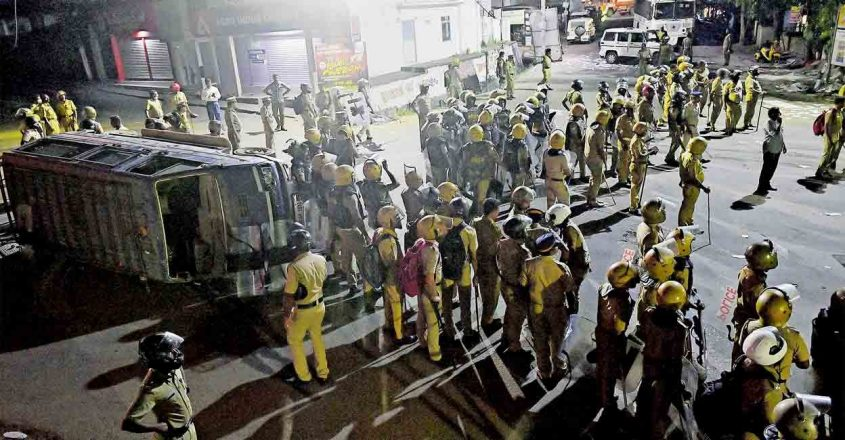
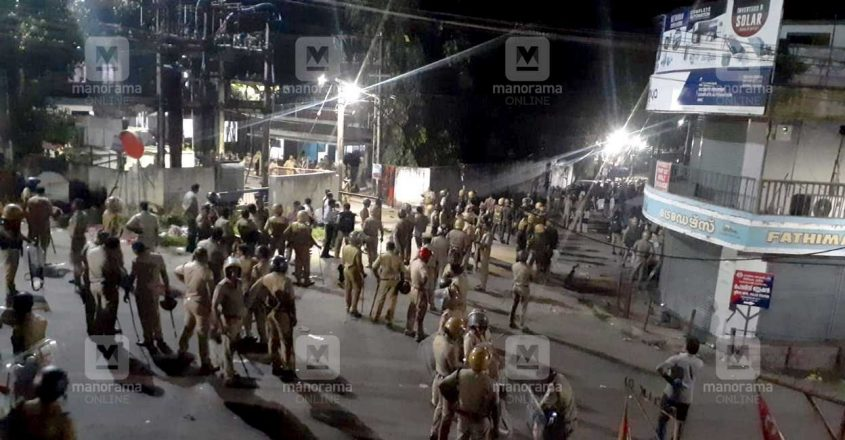
Catholic priests organise attack to sabotage Kerala's Vizhinjam International Seaport Limited
The FIR drawn up by the Vizhinjam police shows Latin Archbishop Fr Thomas J Netto himself as the first accused. The Auxiliary Bishop, Fr Christudas Rajappan, is the second accused and the convenor of the agitation Fr Eugene Pereira is the third.
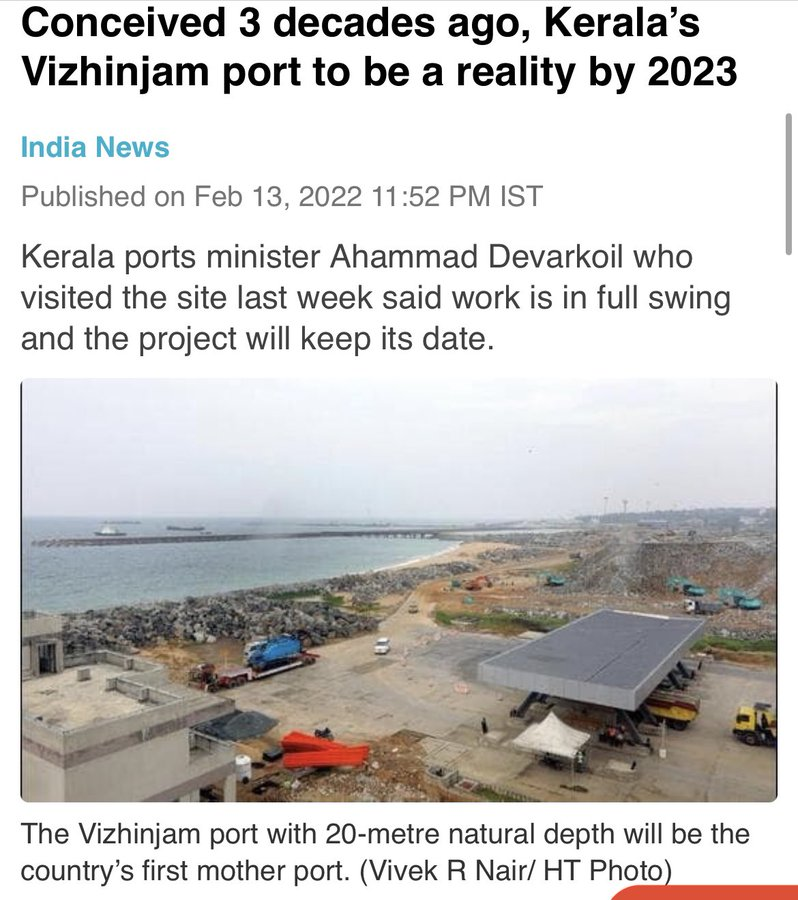
Do you know - Vizhinjam port is super critical for India?
Vizhinjam port was selected as the most cost-effective choice for a trans-shipment terminal in India
• 20-meter natural depth for big ships.
• Requires minimum dredging due to natural sea currents.
• Is on the southern tip of India, and can act as a midpoint of east & west trade.
In India it takes 30 years, yes 30 years, for a development project of national significance to take shape, after going through all the hurdles created by various vested interests.
The foundation stone of the Rs 7,525 crore port, being built under a Public Private Partnership (PPP) model with Adani Ports Private Limited at Vizhinjam near Thiruvananthapuram, was finally laid by then Kerala Chief Minister Oommen Chandy in December 2015. It has since missed its completion deadline.
The port is to have 30 berths, and will be able to handle giant “megamax” container ships. The Adani Group has said the ultramodern port, located close to major international shipping routes, will boost India’s economy. Its location is also of strategic importance, the project’s supporters have claimed. The port is expected to compete with Colombo, Singapore, and Dubai for a share of trans-shipment traffic.
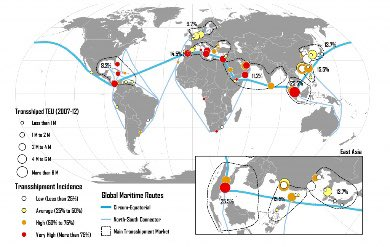
What is a transshipment terminal?
Goods and containers are shipped to an intermediate destination, and then they go to the final destination. These terminals often combine small shipments into larger shipments or divide large loads into smaller ones.
Currently, India does not have a trans-shipment port.
85% of India’s cargo is handled at below ports, and India pays a fee to these countries for every shipment.
• Colombo SriLanka (China owned)
• Singapore
• Klang Malaysia
• Dubai
How will a trans-shipment hub benefit India?
Availability of a 20m contour within one nautical mile from the coast;
Minimal littoral drift along the coast
Forex savings
Foreign direct investment
Increased economic activity at other Indian Ports
Development of logistics infrastructure & value-added services
Proximity to international shipping routes.
Warehousing
Crew change facility
Ship repair, etc
Links to national/regional Highways,
Rail network
While the fishermen’s protests are being supported by the Latin Catholic Church, a local people’s action committee is demanding speedy completion of the project. This committee has the backing of various Hindu community outfits like the Nair Service Society, Sree Narayana Dharma Paripalana Yogam, as well as the Vaikunda Swami Dharma Pracharana, which has a considerable presence among the Nadar community, in southern Kerala. Usual political opponents BJP and CPI(M) have made common cause over the port project, criticising the protesters.
This is not the first time that development projects have been stalled by a foreign hand.
In 2011, similar protests were fuelled by USA & Scandinavian NGOs connected to church against the ₹14,000 crore Kudankulam Nuclear plant, which India was building with help from Russia.
Sterlite Copper plant in Tamil Nadu’s Thoothukudi district became a victim of foreign-funded protests too and was forced to shut down in May 2018. The Sterlite plant met 40 percent of India's copper demand, and now copper is imported from China.
There are countless examples where foreign-funded NGOs have fuelled protests against developmental projects in India.
They use the church and environmental NGOs to funnel funds and keep the agitation simmering. Environmental NGOs will suddenly appear giving their ‘expert’ opinions every day on various local TV channels about how everything will destroy the environment and kill all the people.
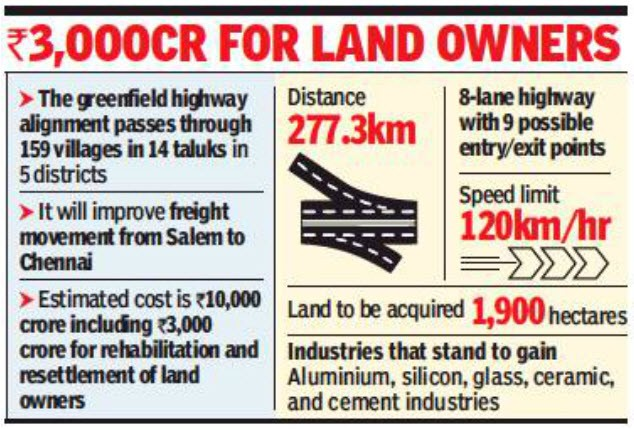
There are regional parties like DMK who back these ‘Poralis’ and NGOs for their own benefit. The DMK opposed the 8 Lane Salem Chennai expressway which would cut the travel distance by over 60kms and bring down travel time by half, when they were in opposition. Now, after coming to power, they are OK with it, mostly because they can make money out of it. Another crucial project cutting down interstate freight traffic was stalled in the process for 5 years.
Ironically, the communists who are known to oppose every developmental project in the country are now compelled to support the Vizhinjam International Seaport project since they are the ruling party in Kerala. They issued a statement in support of the project blaming agitators all over the country!
"There were severe objections to various development projects like the Kudankulam power project, the development of national highways and the laying of the GAIL pipeline. But with strong and determined actions the government had implemented all these projects," the statement said.
It said the government had done all it could to allay the concerns of the local people. "But certain vested interests are standing in the way," the CPM Secretariat said.
The church is an agent used by foreign powers to stall India’s growth and to ensure that India remains a ‘developing country’ forever, ensuring their superiority and also to ensure that Indians look up to them. It is about time SECULAR Hindus understood this loud and clear. They have successfully ensured that Indians became self-loathing of their own culture, languages & heritage.
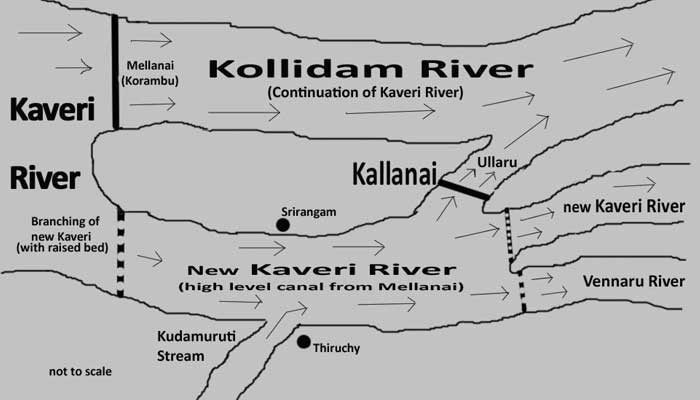
2000 years back, King Karikala Cholan of the Chola dynasty had the foresight to build a dam to divert the waters of the Kaveri across the fertile delta region for irrigation via canals.
The Dam is almost ½ a Km long and is still in excellent condition. The area irrigated by the dam when it was built was 69,000 acres. Early in the 20th century, the irrigated area had gone up to a million acres.
In an analysis of how the Dam remained in continuous operation till now, it was concluded that “the old anicuts worked so well because they sophisticatedly reshaped water currents and sedimentation processes, rather than trying to control all natural elements by force”
Of course, Karikala Cholan did not have to deal with the church or some of the current day politicians and ‘Poralis’ and even if he had to, he would have dealt with them the way they should be dealt with.
Saturday, 9 July 2022
My Friend, Abe San: PM Modi pens emotional tribute to late Shinzo Abe
I first met him in 2007, during my visit to Japan as the Chief Minister of Gujarat. Right from that first meeting, our friendship went beyond the trappings of office and the shackles of official protocol.
Our visit to Toji temple in Kyoto, our train journey on the Shinkansen, our visit to the Sabarmati Ashram in Ahmedabad, the Ganga Aarati in Kashi, the elaborate tea ceremony in Tokyo, the list of our memorable interactions is indeed long.
And, I will always cherish the singular honour of having been invited to his family home in Yamanashi prefecture, nestled among the foothills of Mt. Fuji.
Even when he was not the Prime Minister of Japan between 2007 and 2012, and more recently after 2020, our personal bond remained as strong as ever.
Every meeting with Abe San was intellectually stimulating. He was always full of new ideas and invaluable insights on governance, economy, culture, foreign policy, and various other subjects.
His counsel inspired me in my economic choices for Gujarat. And, his support was instrumental in building Gujarat’s vibrant partnership with Japan.
Later on, it was my privilege to work with him to bring about an unprecedented transformation of the strategic partnership between India and Japan. From a largely narrow, bilateral economic relationship, Abe San helped turn it into a broad, comprehensive one, which not only covered every field of national endeavour, but became pivotal for our two countries’ and the region’s security. For him, this was one of the most consequential relationships for the people of our two countries and the world. He was resolute in pursuing the civil nuclear agreement with India – a most difficult one for his country – and decisive in offering the most generous terms for the High Speed Rail in India. As in most important milestones in independent India’s journey, he ensured that Japan is there side by side as New India accelerates its growth.
His contribution to India-Japan relations was richly recognised by the conferment upon him of the prestigious Padma Vibhushan in 2021.
Abe San had a deep insight into the complex and multiple transitions taking place in the world, the vision to be ahead of his time to see its impact on politics, society, economy and international relations, the wisdom to know the choices that were to be made, the capacity to make clear and bold decisions even in the face of conventions and the rare ability to carry his people and the world with him. His far-reaching policies - Abenomics - reinvigorated the Japanese economy and re-ignited the spirit of innovation and entrepreneurship of his people.
Among his greatest gifts to us and his most enduring legacy, and one for which the world will always be indebted, is his foresight in recognising the changing tides and gathering storm of our time and his leadership in responding to it. Long before others, he, in his seminal speech to the Indian Parliament in 2007, laid the ground for the emergence of the Indo Pacific region as a contemporary political, strategic and economic reality - a region that will also shape the world in this century.
And, he led from the front in building a framework and architecture for its stable and secure, peaceful and prosperous future, based on values that he deeply cherished – respect for sovereignty and territorial integrity, adherence to international law and rules, peaceful conduct of international relations in a spirit of equality and shared prosperity through deeper economic engagement.
The Quad, the ASEAN-led forums, the Indo Pacific Oceans Initiative, the India-Japan Development Cooperation in the Indo-Pacific, including Africa and the Coalition for Disaster Resilient Infrastructure all benefited from his contributions. Quietly and without fanfare, and overcoming hesitation at home and scepticism abroad, he transformed Japan’s strategic engagement, including in defence, connectivity, infrastructure and sustainability, across the Indo Pacific region. For that, the region is more optimistic about its destiny and the world more confident about its future.
During my Japan visit in May this year, I had the opportunity to meet Abe San, who had just taken over as the Chair of the Japan-India Association. He was his usual self - energetic, captivating, charismatic and very witty. He had innovative ideas on how to further strengthen the India-Japan friendship. When I said goodbye to him that day, little did I imagine that it would be our final meeting.
I will always be indebted for his warmth and wisdom, grace and generosity, friendship and guidance, and I will miss him dearly.
We in India mourn his passing as one of our own, just as he embraced us with an open heart. He died doing what he loved the most – inspiring his people. His life may have been cut short tragically, but his legacy will endure forever.
I extend heart-felt condolences on behalf of the people of India and on my own behalf to the people of Japan, especially to Mrs. Akie Abe and his family. Om Shanti.
Monday, 19 July 2021
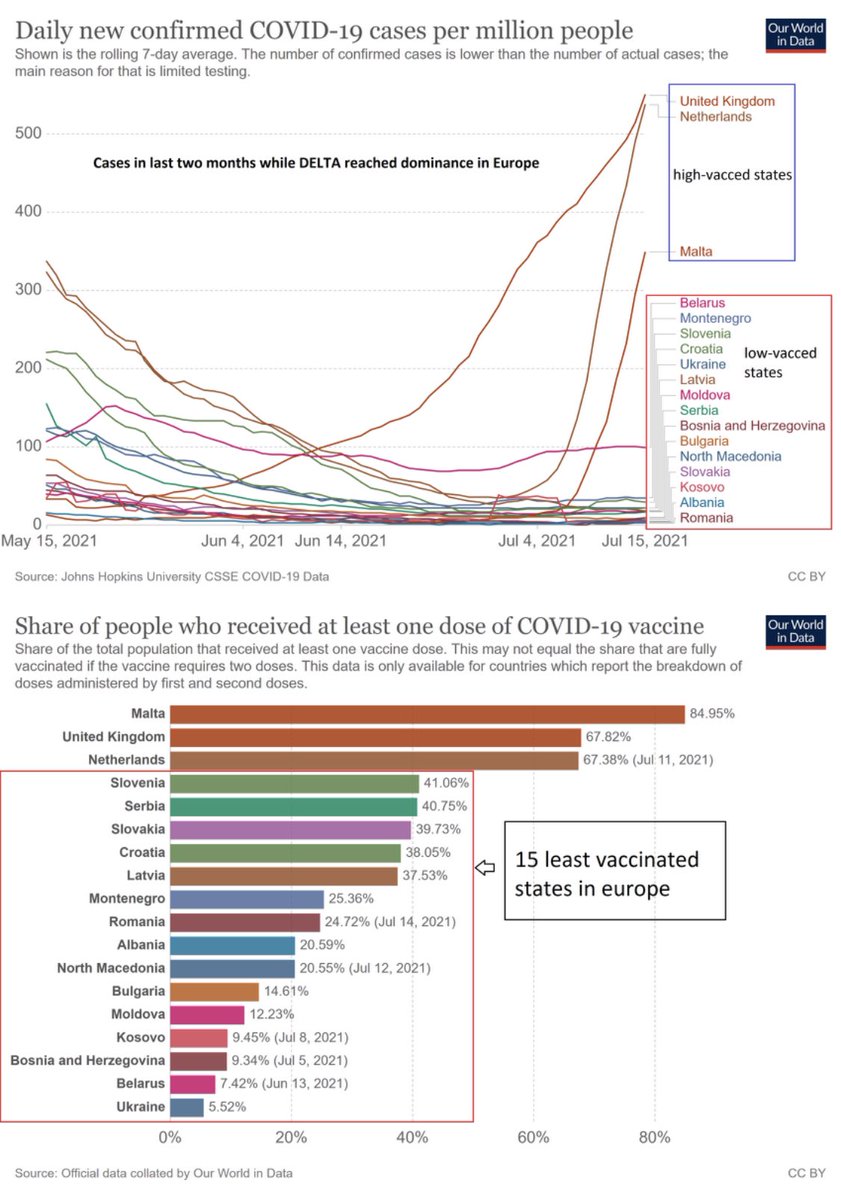
Europe seeing surges at many places but 15 least vaccinated countries don‘t seem to face any problem
Thread by @holmenkollin
151,639 views

Something really odd is going on:
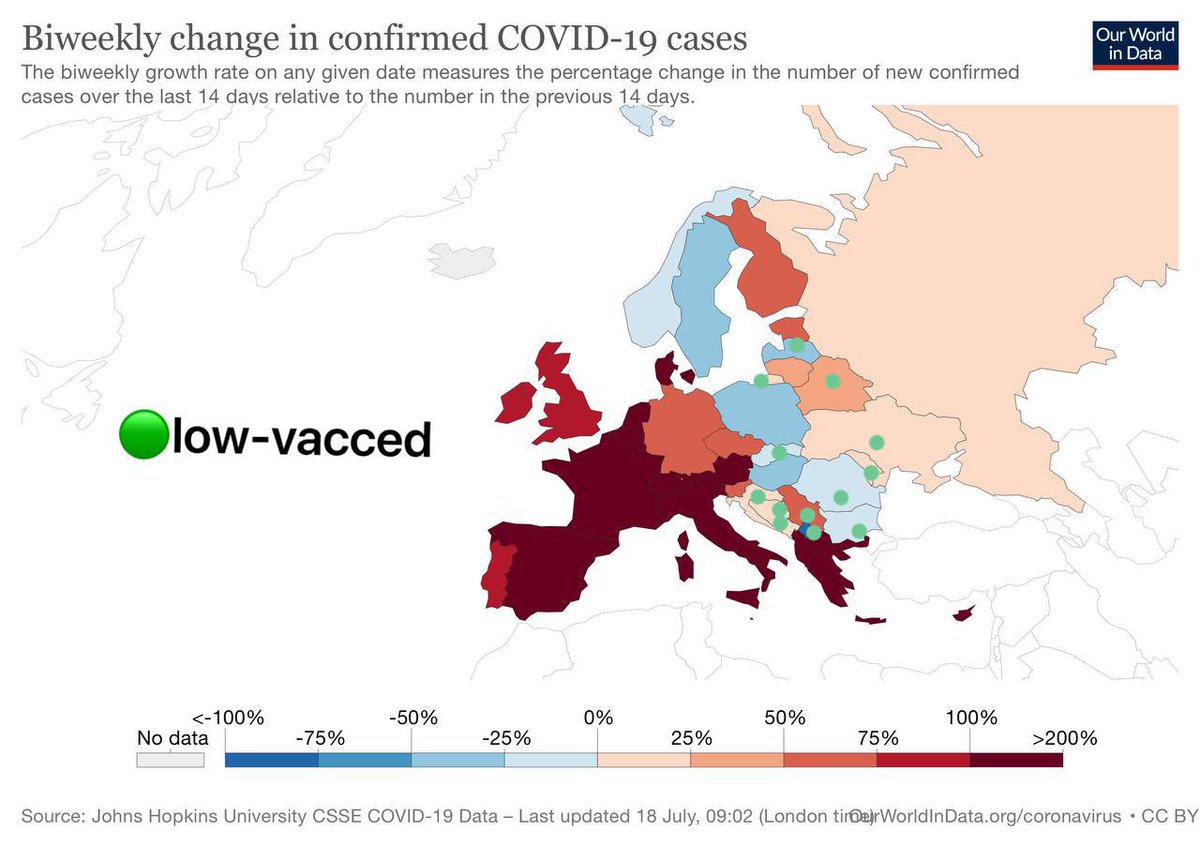
In Europe we are seeing surges at many places where most of the population has already been vaccinated.
At the same time, the 15 least vaccinated countries don‘t seem to face any problem.
Also take a look at what went on in the 15 most vaccinated countries worldwide
(SPOILER: doesn‘t look to good)
⬇️
I did not include tiny Gibraltar, which claims to have double-jabbed all (!) of its citizens.
So why do cases suddenly rise through the roof? (yes it‘s residents, not tourists)
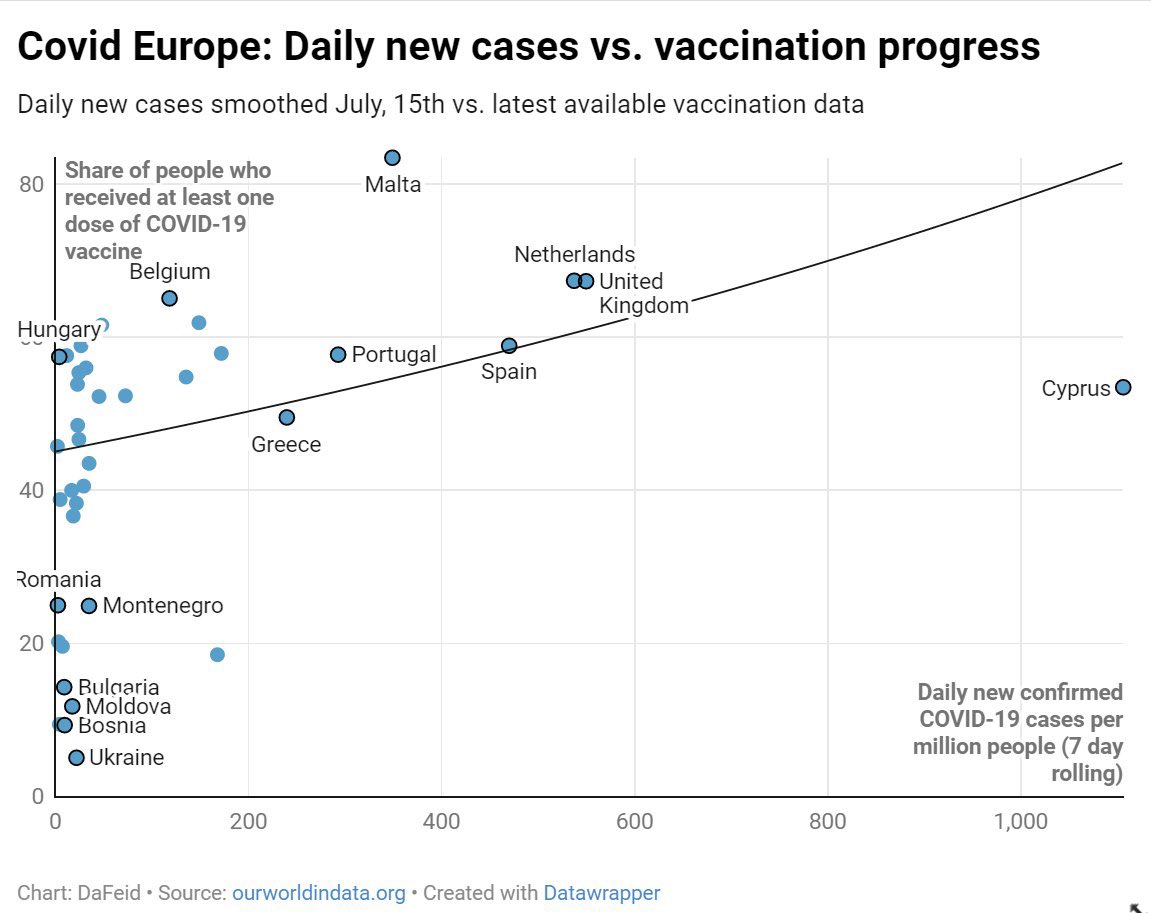
Cyprus: majority of people vaccinated.
Highest case count in the world.
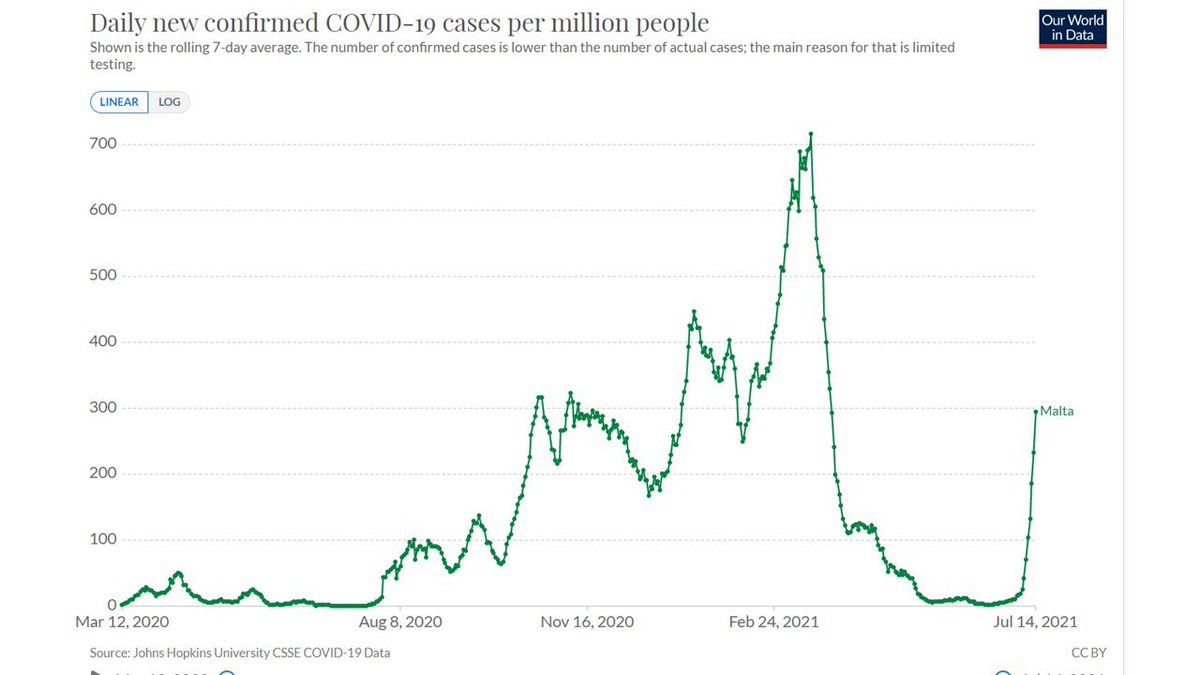
Malta: highest vaccination rate in the western world.
Also currently one of the steepest inclines in cases you may ever have seen. 
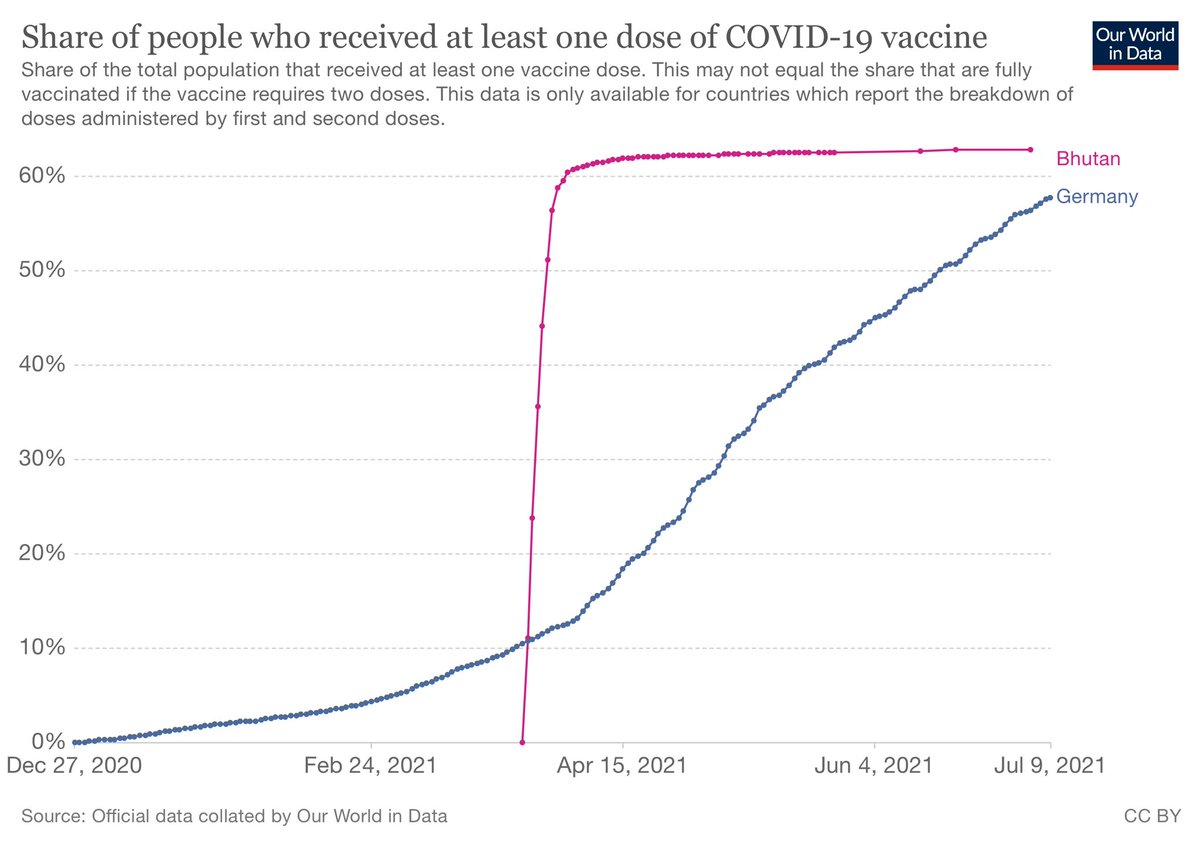
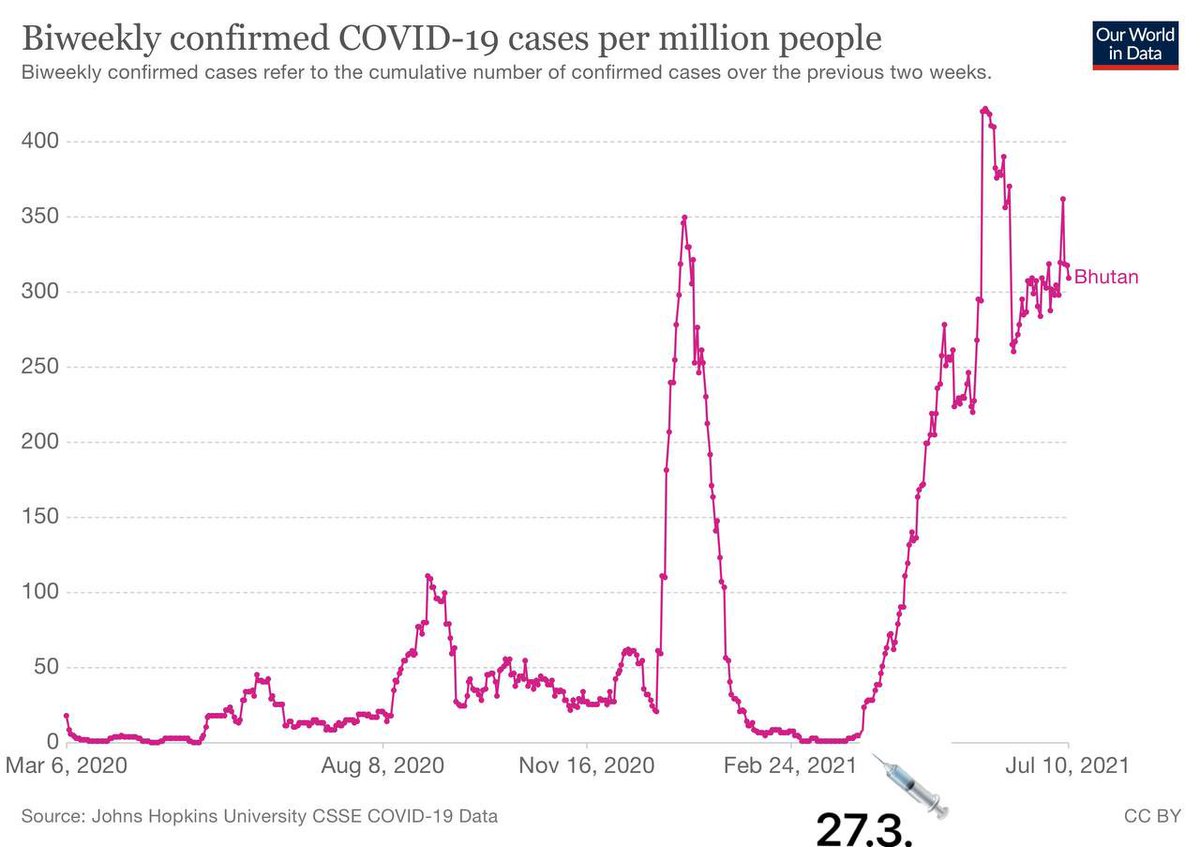
What‘s special about small kingdom of Bhutan is that they jabbed 64% of their population within one week, starting 27/3.
Just a few days after the start of the rollout, cases went up. 

Seems like we have a pretty solid correlation here.
(h/t @DaFeid) 
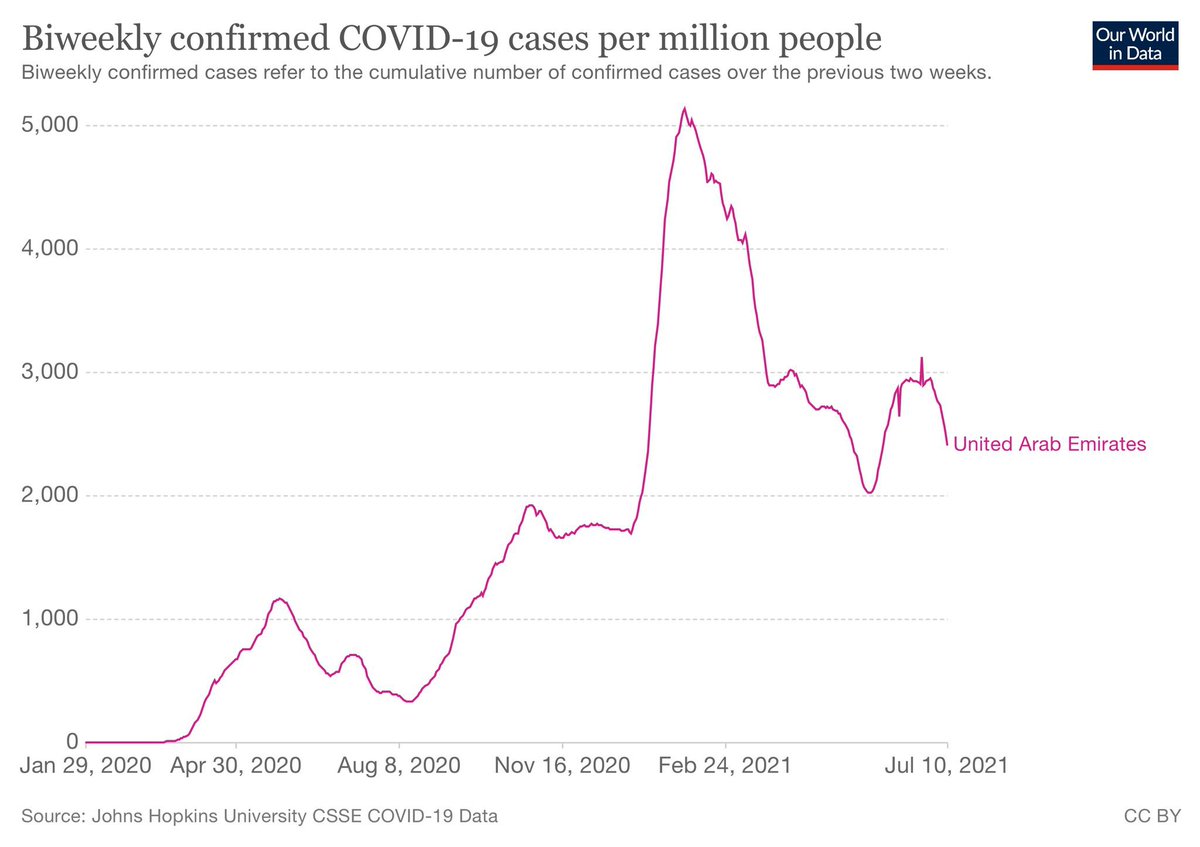
Emirates: highest vaccination rate in the whole world.
They just experienced their second highest peak since pandemic began. 
At this point, some of the early-bird lockdowners take notice:
Why is my fully masked and vacced state not keeping cases down?
You see how dangerous delta is??
+1
„But what about 100% vaccination rate?“
Here you go: 1600 double-jabbed british soldiers on HMS Queen Elizabeth. They even had hygiene rules, distancing etc
Wait 2 months…
1 in 16 (= higher case rate than any country!) turns out to be infected.
„But the vaccine also makes people less transmissible?“
That’s what some studies claimed, yes.
But at what point in time did they measure this effect?
The jabs initially trigger your immune system.
But what if the effect fades and you walk around bar any mucosal protection?
2 points being made:
„High-vacced countries opened up“
That’s a funny one. It‘s rather the opposite. In the low vacced countries of europe you see hardly any restrictions, they just care less and people don‘t comply anyway.
Surging countries still have masks, clubs closed etc.
„arbitrary selection“
No. Comparing extreme groups is scientifically reasonable. See thread: 15 MOST vacced countries.
15 least vacced countries in world would mean mostly africa (noone trusts their data) so I stick to europe here.
And for the picture i used 3 counter-examples
There are a lot more examples for high-vacced, surging countries in europe now.
Actually almost every high-vacced state is surging (despite restrictions!), every low-vacced state is NOT!
Now also germany starts worrying about rising numbers.
„But cases are also flat in hungary, poland or sweden“.
If your point is that it doesn‘t happen in EVERY country (yet), that‘s fine.
Anyway I am not claming causality here.
But those 3 are also supposed to have the highest share of NATURAL immunity in population.
Last point but that‘s just for beginners:
Testing is NOT an issue here. If cases go up, you will see it, regardless the level of testing
Friday, 14 May 2021
Supplying oxygen to a nation that is at war simultaneously in 30 states
“Nobody is understanding the challenges of supplying oxygen to a nation that is at war”