Saturday, 31 March 2018

Hanuman ~ From China to Caribbean islands - Tale of two Hanumans

Hanuman ~ From China to Caribbean islands - Tale of two Hanumans...
An interesting article put together by Twitter user 

Adivaraha

@vajrayudha11

https://twitter.com/i/moments/979886925095096320

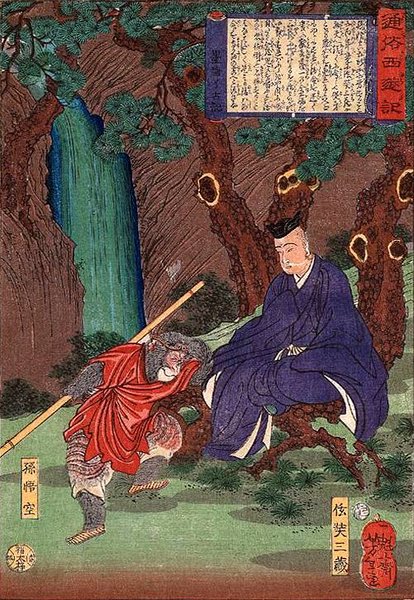
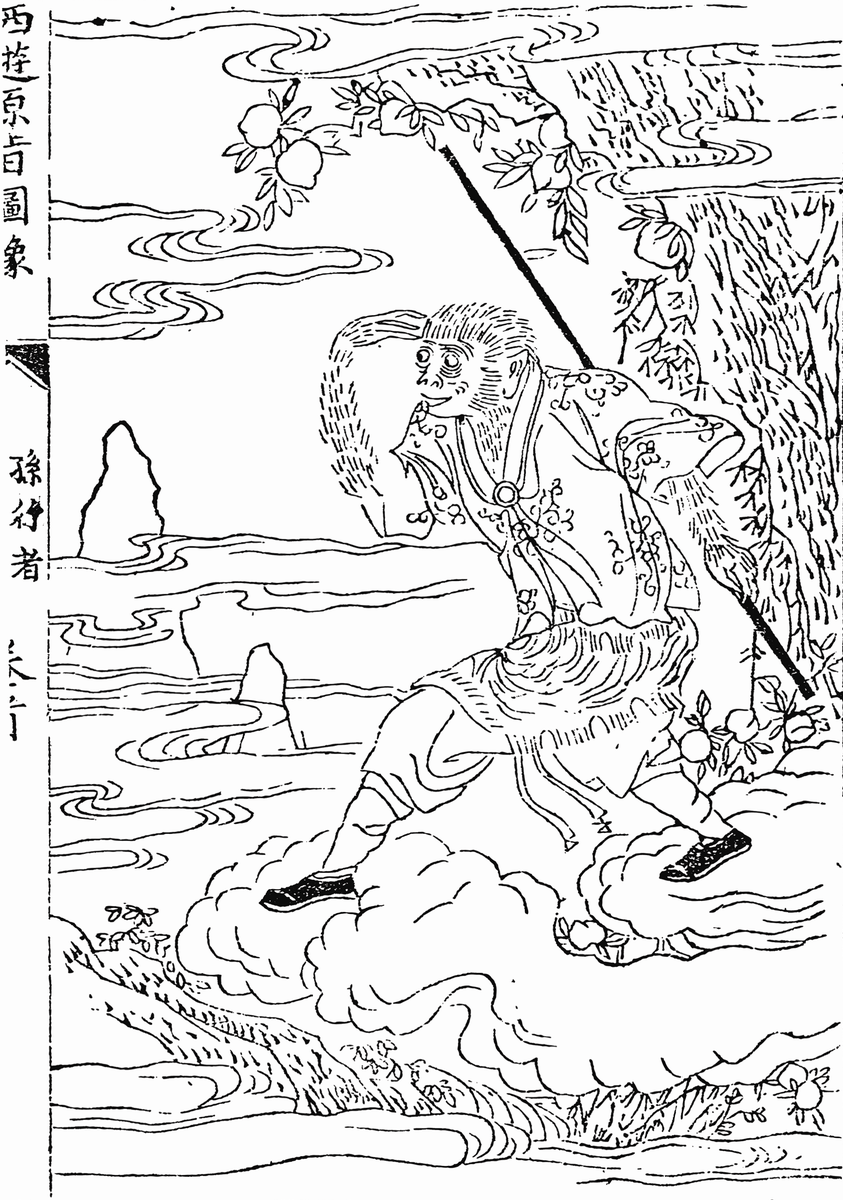
Sun Wukong - Legendary monkey hero of Chinese legend whose character is directly inspired from Hanuman himself.

One can get some idea of close resemblance between two from the fact that Just like Hanuman, Sun Wukong is also immortal & son of wind.

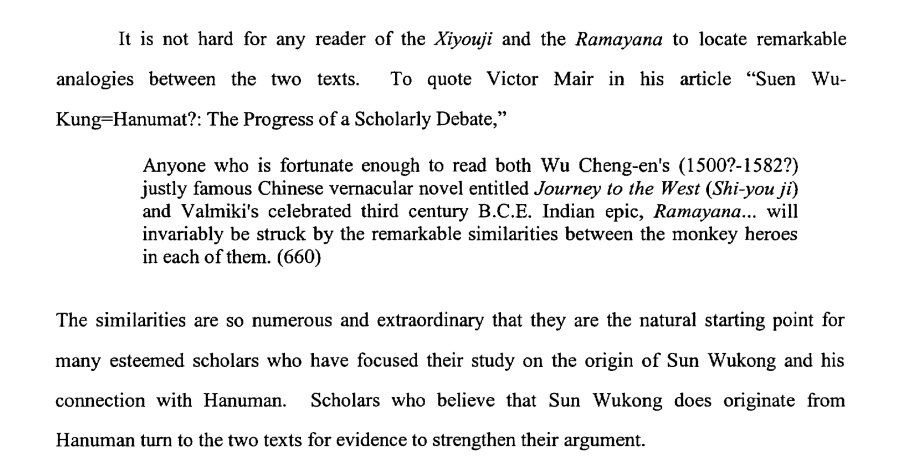
Similarly other exploits of Sun Wukong like threatening Jade Emperor of heaven in childhood & subsequently receiving blessings from him transforming into various shapes & sizes, entering into mouth of a female monster named Rakshasi & then changing back to his true form stealing fruits & uprooting the tree in grove of immortal Chen yuan, making giant leaps in the sky & so on has close resemblance with Hanuman's exploits as anyone with cursory reading of Ramayana can tell! Not only that, description of Sun Wukong's eyes, his tail his residence in forest all have remarkable similarities with analogus descriptions of Valmiki Ramayana. In words of noted sinologists

Tales of Hanuman reached China probably through Central Asia along with Chinese Buddhist pilgrims like Xuangzang who traveled to India or via Hindu traders to China along the maritime trade routes of South East Asia.


Who knows perhaps it was indeed Chiranjivi lord Hanuman himself who was guarding Xuangzang on his pilgrim towards the land of Dharma

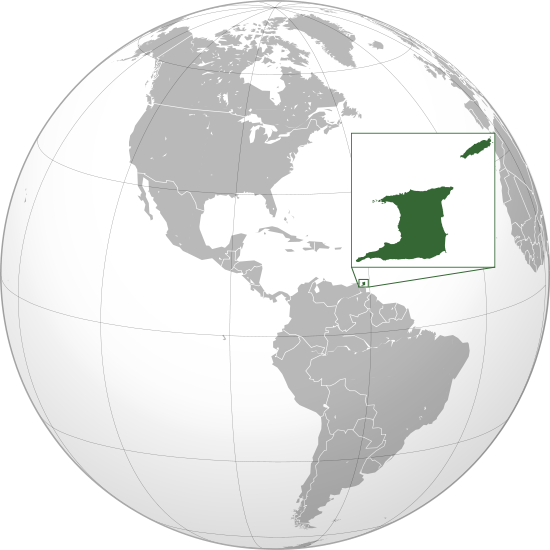
While Sun Wukong is legacy of our vibrant ancient past, tiny island of Trinidad on north coast of South America has other story to tell


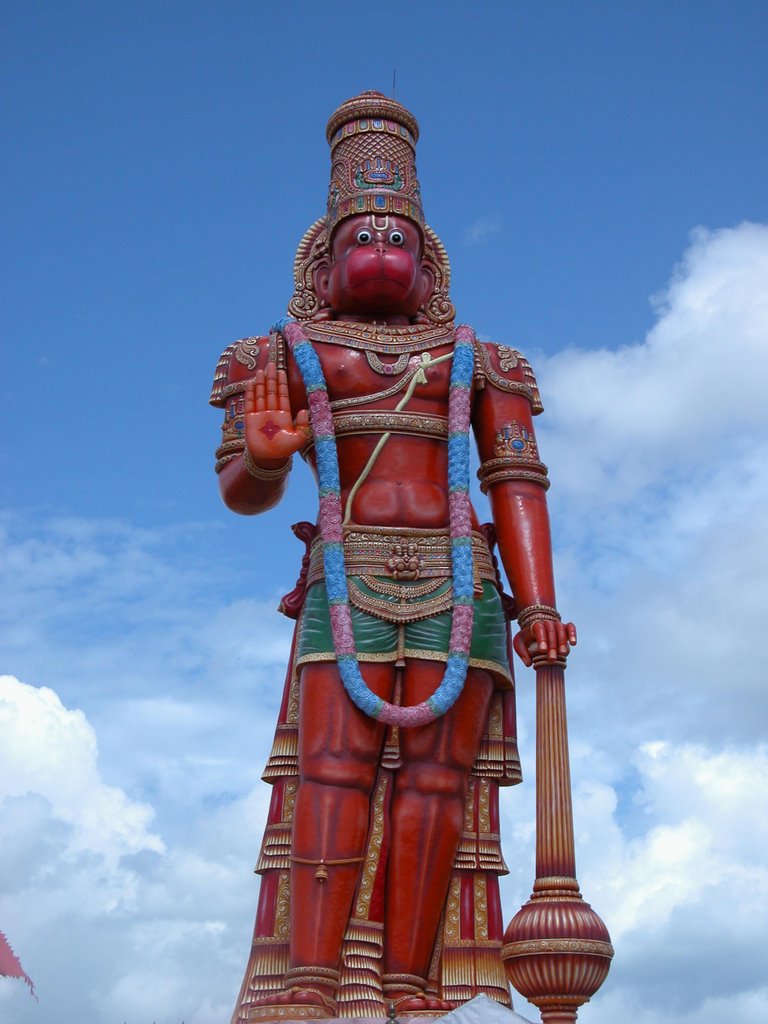
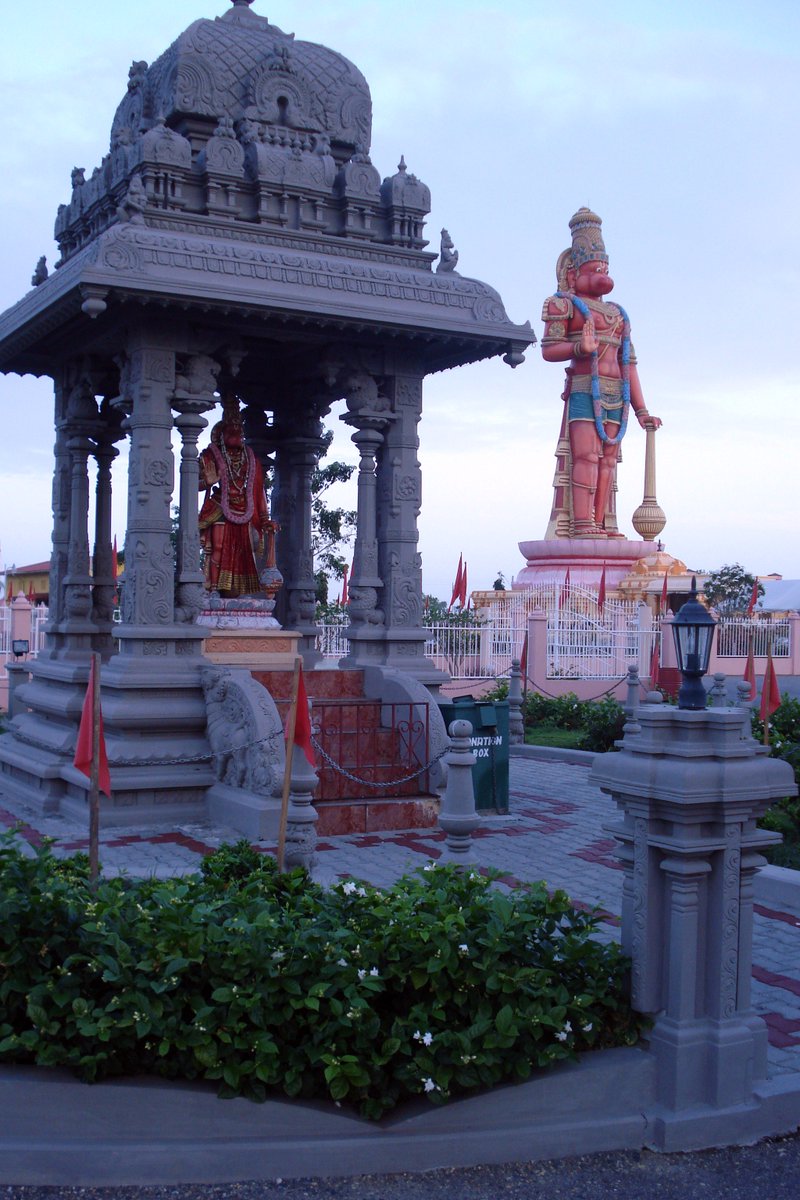
Here in Trinidad stands the tallest Murti of Hanuman outside India, benevolently looking after the Hindus of tiny Caribbean islands.


But ofcourse it didn't happen out of nowhere. It has a long history of struggle and hardships behind it. In 19th Century with expansion of western colonization many poor Indians were taken as bonded laborers to work in Sugar plantations of such far away islands for meager income. But Despite facing extreme hardship in far away lands ~150 yrs ago, they kept alive their religion alive. Today they are prosperous & thriving. In 2010 Kamla Persad-Bissessar became the first lady PM of Trinidad & Tobago for instance

However they haven't forgotten their roots. Giant Murti of Hanuman at Trinidad is perhaps the apt tribute to all those brave Indians who ventured into those far away islands of the world with spirit of Hinduism in their heart and kept it alive for all those years.

Thursday, 29 March 2018

Why is India buying world’s emptiest airport in Sri Lanka for $300 Million, what is Narendra Modi planning?

Why is India buying world’s emptiest airport in Sri Lanka for $300 Million, what is Narendra Modi planning?!

Source-https://postcard.news/india-buying-worlds-emptiest-airport-sri-lanka-300-million-narendra-modi-planning/amp/?__twitter_impression=true

Few days back, the Interpreter website first reported about how India is buying the world’s emptiest Airport in Srilanka. It was definitely a surprise for people of India as to why India was buying Airports which are completely empty and receives less than 12 passengers a day?!

But not many people know that these are some of the master plans of this government to counter China’s dominance in the Indian Ocean. Yes, China since 10 years has expanded its base in Sri Lanka and Indian Ocean in a bid to dominte South East Asian regions. Some how, the previous Congress government never thought that China as a potential threat to India and continued to ignore their dominance and suppressed ourselves from countering them.

But after Modi government came to power in 2014, the first thing they did was to revamp the entire diplomatic approach with all countries. The Chinese threat in Arunachal Pradesh and Doklam was very well known for which they cleared all projects in East India and made sure that the army had complete control over the region. India even prevented the expansion of roads by Chinese in the Doklam region after which there was a tense situation between the two countries. The Modi government which acted very strong made sure the Chinese troops were withdrawn from the area which was the biggest strategic win for India.

So, the Modi government is relentlessly trying to stop the Chinese domination around South East Asia and reviving India in every aspect to put back India on top of the world. With the same intention, the Narendra Modi government is now buying the world’s emptiest airport in Srilanka for 40-year lease which is nearly over 2,000-acre space and planning to turn this into profitable business. 

The strategic plan behind this is that its located just half hour drive from the Hambantota shipping port. This shipping port was bought by Chinese this year for $1.1 billion for 99-year lease period. The Chinese aim was to use this port to construct one belt, one road to connect cross continents with an intention of expanding their military and economic base. The Chinese offered to build a massive port, airport and an international cricket stadium all connected through Chinese-built multi-lane freeways.[media-credit id=3 align=”alignnone” width=”669″][/media-credit]


The port which is located next to busiest sea lanes across the northern Indian Ocean gives the Chinese best advantage for transhipment and logistics. The Indian intelligence report said that Chinese was going to use this port as their Naval base, as a part of their ambitious project “String of Pearls”, a plan to surround the Indian Ocean completely, there by dominating India in the south.


But the Chinese plans have been severely hampered after the Modi government decided to buy the Airport. The Chinese very well understand that without the access of an Airport there is no way that the port can be turned into an Naval base. The naval base also requires a maritime air surveillance capabilities which has been now blocked by the Indians. Rather, the Indians will have more advantage of having an airport which will facilitate the transportation between India and Sri Lanka. It also gives India a complete control over the area and the ship port will be under the watch full eyes of India.

India is paying a whooping $300 Million to buy the airport and stop the Chinese from turning the port into a Naval base. In the year 2015, the US Defense Department report had confirmed that Chinese Missiles submarines were operating in the Indian Ocean which posed serious threat to Indian states. It is also said that many warships and submarines were docked in the Hambantota port since 2-3 years. The Chinese even bought the biggest and busiest shipping lanes in Sri Lanka to hamper India’s transportation routes in Sri Lanka. Now, the Hyundai cars that are manufactured in India are parked in the Chinese built port in Hambantota for which India pays huge amount.


This was a strategic plan by Chinese to use Sri Lankan ports to dominate the Indian Ocean and then expand their military dominance upto South Africa with the help of Pakistan. The main aim was to encircle India using Bangladesh, Myanmar, Malaysia and Sri Lanka in the East and take the help of Pakistan to move towards west.


So it was more of a necessary for India to buy the Airport in order to put a break to Chinese dominance over the area. Narendra Modi has taken a very strong decision and is planning a massive project to build new sea route with the help of Japan and US which is completely under the control of India. Years of neglect and ignorance of the Congress government has made India weak in the Indian Ocean which may turn out to be a weak point in future if left unattended.

Credit: The Interpreter

https://www.lowyinstitute.org/the-interpreter/why-india-buying-world-s-emptiest-airport

Business Insider

https://www.businessinsider.in/India-is-buying-worlds-emptiest-airport-in-its-battle-for-territorial-dominance-with-China/articleshow/62046916.cms

Friday, 23 March 2018

Indian Railways-Airport Like Stations, GIS portal, satellite imagery and GPS to monitor trains, manage its assets

Indian Railways to transform 90 stations into ‘airport-like’ transit hubs


The Railway Ministry has decided to redevelop 90 railway stations into world-class transit hubs. The move has been decided in order to enhance passenger amenities at railway stations, hence providing a world-class experience.

The redevelopment plan will include many major railway stations, which will be provided with many facilities including CCTV cameras, Wifi, renovation of the station buildings, modular water kiosks, water ATMs, LED lights, lifts, escalators, stainless steel benches, modular catering kiosks etc. Apart from these facilities, waiting halls, waiting rooms, retiring rooms, wash rooms of the stations will be improved as well. 

The 90 selected railways stations which will be converted into world class transit hubs include many major railway stations across the nation such as Tirupati, Visakhapatnam, Vijayawada stations of Andhra Pradesh, Guwahati station of Assam, Patna, Patliputra, Sonpur stations of Bihar, Chandigarh station of Chandigarh, Raipur station of Chhattisgarh, Safdarjung, Anand Vihar stations of Delhi, Madgaon station of Goa, Gandhinagar, Surat, Ahmedabad, Rajkot, Vadodra stations of Gujarat, Ambala station of Haryana, Shimla station of Himachal Pradesh, Jammu Tavi station of Jammu and Kashmir, Ranchi station of Jharkhand, Mysuru station of Karnataka, Kozhikode, Kottayam, Palakkad statons of Kerala, Jabalpur, Bhopal stations of Madhya Pradesh, Shivaji Nagar, Lonawala, Pune stations of Maharashtra, Bhubaneswar, Cuttak stations of Odisha, Puducherry station of Puducherry, Jaipur, Udaipur, Jodhpur stations of Rajasthan, Madurai, Chennai Egmore, Tiruchchirappalli stations of Tamil Nadu, Warangal station of Telangana, Lucknow, Allahabad, Jhansi, Mathura, Varanasi Junction, Ayodhya, Gorakhpur stations of Uttar Pradesh, Dehradun, Haridwar stations of Uttarakhand, Asansol, Howrah, Darjeeling stations of West Bengal. Apart from these, many more stations across the country will undergo the renovation plan.

Redevelopment of railway stations

Redevelopment of railway stations


For the redevelopment of over 600 major railway stations, the national transporter also launched an idea competition SRIJAN (Station Rejuvenation through Joint Action). The idea competition was launched at MyGov portal, under which all stakeholders like railway passengers, architects, urban planners, engineers are allowed to send their ideas for the stations’ redevelopment. However, the last date to submit the entries for this competition is March 26, 2018.


GIS portal, satellite imagery and GPS to monitor trains, manage its assets

In order to give a power boost to its services, Indian Railways is all set to use satellite imagery, GPS and GIS to monitor, maintain and manage its assets across the country.

There are two major projects that have been undertaken by the Indian Railways. One is mapping of the entire railway asset infrastructure – which is in two phases; the first is the mapping of the entire track network in the country and in the second phase is mapping of railway land and other assets along the tracks, the Ministry of Railways said in a statement.

Elaborating on this, Sanjay Das Additional Member Railway Board (Computerisation and Information Systems), former MD CRIS said, “We are working in-house for the mapping of the data and have developed a GIS module for this. Under this, the track maintenance trolleys are being fitted with GPS chips and as the trolley moves, the track gets mapped.”

The land and asset mapping exercise will help the Railways majorly to identify encroachments, as well as enable Railways to keep a tab on them and use for future planning exercise.
Creating a milestone

An MoU has been signed between ISRO and Centre for Railway Information System (CRIS) to develop this application. In this application land plans of Indian Railways will be available for viewing overlaid on satellite imagery. The INR 380-million asset mapping project was started in April 2017 when the railway ministry signed an agreement with Indian Space Research Organisation.

Das further said, “We are collaborating with NRSC for this project where they have provided us with Cartosat imagery and Bhuvan data for making the maps. In addition, we are also flying drones to map the tracks. However, I must admit that the progress is a bit slow as we are doing it all in-house. We can expedite it with better interaction with the private industry.”

The other important project that the Railways is working on is the real-time tracking of trains. Under this, NavIC devices will be installed in the entire fleet of about 12,000 locomotives to locate each train accurately. Railways is working with ISRO on this project. This data will be put into the Railways control office application through which it will be disseminated on a real-time basis to all passengers.

“This application will be hugely beneficial to keep a check on the safety aspect. Once the exact location of the train is determined, we can take advanced measures; rectify the problem area to avert any mishaps. The technology will also be used to give warning at unmanned level crossings,” Das said.

Railways is also thinking of 3D mapping of all the stations. Under this project six stations have been chosen as pilots. Here also NRSC is involved and they have mapped two stations including Varanasi and New Delhi. Once the 3D mapping is complete, passengers will have an application through which they will be able to visualize the entire station in 3D and thus locate any services at the stations. Here too, we hope that the private players will play an important role in the coming times.

Friday, 9 March 2018

You are eligible for up to Rs.10Lakh against your ATM card/Bank Account

You are eligible for up to Rs.10Lakh against your ATM card/Bank Account


Banks accord insurance to ATM card owners without any fee, yes that is true. Almost all banks whether private or public provide accidental hospitalisation cover or accidental death cover to their customers having an operation bank account.

The range of insurance provided under the criteria starts from Rs 50000 to Rs 10 lakh, depending upon the customer to customer bank dealings. People are reluctant to know about the cover provided by the banks and neither banks provide any information to their customers. However, most of the banks are offering cover on credit cards also. If the bank account is inoperative, then your cover may get withdrawn by the bank.

Kunal Kumar chief manager of Corporation bank said “ Our bank provides accidental insurance claim to Super card holder upto Rs 5lah, Signature card holder upto Rs 10lakh and Rupay card holder upto Rs 1 lakh, anyone who holds these cards can claim their insurance , but his card should be active and he must have done transactions.”

How to claim Insurance

Immediately inform the police after the accident and highlight everything properly. In case of hospitalisation, all the medical reports have to be submitted.

If it is a case of accidental death these things will be required to deposit: the post-mortem report, police panchnama, death certificate, valid driving license. Bank must be informed that the card holder has made transaction in last 90 days.

Monday, 26 February 2018

DNA shows early Briton had dark skin

Cheddar Man: DNA shows early Briton had dark skin
By Paul RinconScience editor, BBC News website
Source -http://www.bbc.com/news/science-environment-4293919


DNA shows early Brit had dark skin

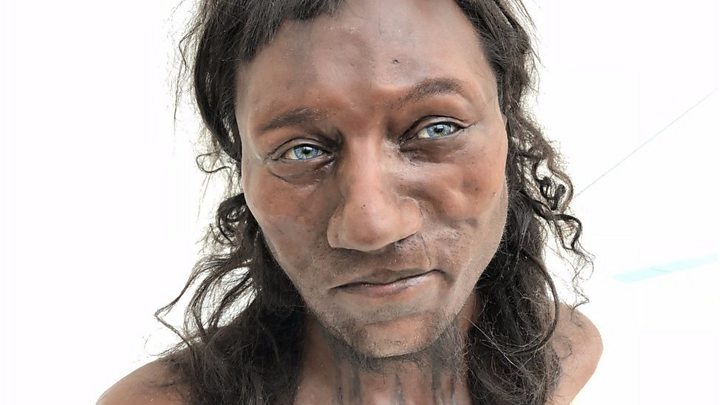
A cutting-edge scientific analysis shows that a Briton from 10,000 years ago had dark brown skin and blue eyes.

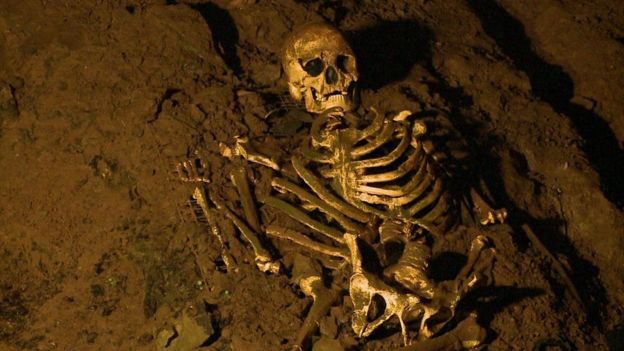
Researchers from London's Natural History Museum extracted DNA from Cheddar Man, Britain's oldest complete skeleton, which was discovered in 1903.

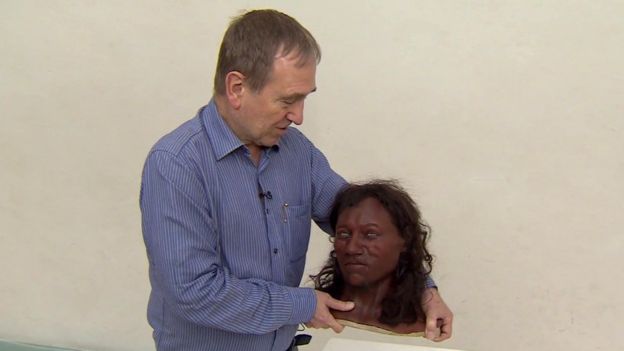
A University College London team analysed the genome, and the results were used for a facial reconstruction.

It underlines the fact that the lighter skin characteristic of modern Europeans is a relatively recent phenomenon.

No prehistoric Briton of this age had previously had their genome analysed. As such, the analysis provides valuable new insights into the first people to resettle Britain after the last Ice Age.

The analysis of Cheddar Man's genome - the "blueprint" for a human, contained in the nuclei of our cells - will be published in a journal, and will also feature in the upcoming Channel 4 documentary The First Brit, Secrets Of The 10,000-year-old Man.

Cheddar Man's remains had been unearthed 115 years ago in Gough's Cave, located in Somerset's Cheddar Gorge. Subsequent examination has shown that the man was short by today's standards - about 5ft 5in - and probably died in his early 20s.

Prof Chris Stringer, the museum's research leader in human origins, said: "I've been studying the skeleton of Cheddar Man for about 40 years

"So to come face-to-face with what this guy could have looked like - and that striking combination of the hair, the face, the eye colour and that dark skin: something a few years ago we couldn't have imagined and yet that's what the scientific data show."A A replica of Cheddar Man's skeleton now lies in Gough's Cave

Fractures on the surface of the skull suggest he may even have met his demise in a violent manner. It's not known how he came to lie in the cave, but it's possible he was placed there by others in his tribe.

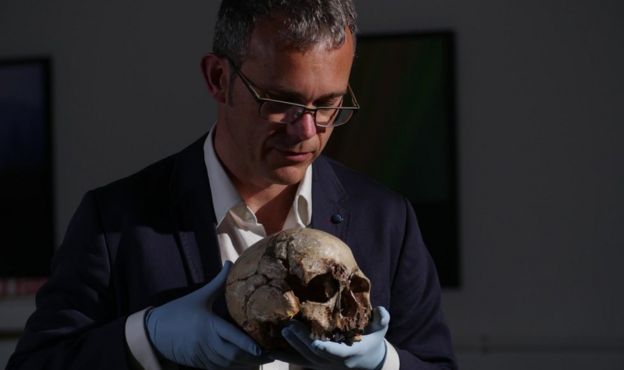
The Natural History Museum researchers extracted the DNA from part of the skull near the ear known as the petrous. At first, project scientists Prof Ian Barnes and Dr Selina Brace weren't sure if they'd get any DNA at all from the remains.

But they were in luck: not only was DNA preserved, but Cheddar Man has since yielded the highest coverage (a measure of the sequencing accuracy) for a genome from this period of European prehistory - known as the Mesolithic, or Middle Stone Age.

They teamed up with researchers at University College London (UCL) to analyse the results, including gene variants associated with hair, eye and skin colour.

Extra mature Cheddar

They found the Stone Age Briton had dark hair - with a small probability that it was curlier than average - blue eyes and skin that was probably dark brown or black in tone.

This combination might appear striking to us today, but it was a common appearance in western Europe during this period.

Steven Clarke, director of the Channel Four documentary, said: "I think we all know we live in times where we are unusually preoccupied with skin pigmentation."

Prof Mark Thomas, a geneticist from UCL, said: "It becomes a part of our understanding, I think that would be a much, much better thing. I think it would be good if people lodge it in their heads, and it becomes a little part of their knowledge."

Unsurprisingly, the findings have generated lots of interest on social media.

Cheddar Man's genome reveals he was closely related to other Mesolithic individuals - so-called Western Hunter-Gatherers - who have been analysed from Spain, Luxembourg and Hungary.

Dutch artists Alfons and Adrie Kennis, specialists in palaeontological model-making, took the genetic findings and combined them with physical measurements from scans of the skull. The result was a strikingly lifelike reconstruction of a face from our distant past.

Pale skin probably arrived in Britain with a migration of people from the Middle East around 6,000 years ago. This population had pale skin and brown eyes and absorbed populations like the ones Cheddar Man belonged to.Prof Chris Stringer had studied Cheddar Man for 40 years - but was struck by the Kennis brothers' reconstruction

No-one's entirely sure why pale skin evolved in these farmers, but their cereal-based diet was probably deficient in Vitamin D. This would have required agriculturalists to synthesise this essential nutrient in their skin using sunlight.

"There may be other factors that are causing lower skin pigmentation over time in the last 10,000 years. But that's the big explanation that most scientists turn to," said Prof Thomas.

Boom and bust
The genomic results also suggest Cheddar Man could not drink milk as an adult. This ability only spread much later, after the onset of the Bronze Age.

Present-day Europeans owe on average 10% of their ancestry to Mesolithic hunters like Cheddar Man.

Britain has been something of a boom-and-bust story for humans over the last million-or-so years. Modern humans were here as early as 40,000 years ago, but a period of extreme cold known as the Last Glacial Maximum drove them out some 10,000 years later.

There's evidence from Gough's Cave that hunter-gatherers ventured back around 15,000 years ago, establishing a temporary presence when the climate briefly improved. However, they were soon sent packing by another cold snap. Cut marks on the bones suggest these people cannibalised their dead - perhaps as part of ritual practices.The actual skull of Cheddar Man is kept in the Natural History Museum, seen being handled here by Ian Barnes

Britain was once again settled 11,000 years ago; and has been inhabited ever since. Cheddar Man was part of this wave of migrants, who walked across a landmass called Doggerland that, in those days, connected Britain to mainland Europe. This makes him the oldest known Briton with a direct connection to people living here today.

This is not the first attempt to analyse DNA from the Cheddar Man. In the late 1990s, Oxford University geneticist Brian Sykes sequenced mitochondrial DNA from one of Cheddar Man's molars.

Mitochondrial DNA comes from the biological "batteries" within our cells and is passed down exclusively from a mother to her children.

Prof Sykes compared the ancient genetic information with DNA from 20 living residents of Cheddar village and found two matches - including history teacher Adrian Targett, who became closely connected with the discovery. The result is consistent with the approximately 10% of Europeans who share the same mitochondrial DNA type
Sunday, 18 February 2018

Sri Lanka's civil war through a Tamil lens-The realities of an armed conflict

Sri Lanka's civil war through a Tamil lens

by Charlotte Mitchell 1 Feb 2018 http://www.aljazeera.com/indepth/features/qa-sri- lanka-civil-war-tamil-lens-180131121436527.html
Jude Ratnam was five years old when he fled the Sri Lankan capital, Colombo, with his family.

In 1983, tensions between Sri Lanka's majority-Sinhalese government and minority Tamils erupted in a 26-year civil war that ended in 2009. The bloody conflict claimed about 100,000 lives, displaced hundreds of thousands of people and left indelible scars on the nation.

In 2006, Ratnam enrolled to study cinema and film making. Upon graduating, he embarked on what would be a decade-long exercise in filming and documenting his experience of a civil war that tore his country apart.

In his film Demons in Paradise, Ratnam ventured beyond the violence of the conflict, exploring questions surrounding the very idea of Tamil identity.

Al Jazeera spoke to Ratnam about the legacy of the Sri Lankan civil war and the possibility of true reconciliation. 

Al Jazeera: Why did you choose to make a film about Sri Lanka's civil war?

Jude Ratnam: I definitely didn't know how I was going to tell the story, but the impulse to make a documentary about the conflict came to me when the "activist" in me grew disillusioned.

Before I got into film making, I was an NGO worker. But at the NGO, I felt a growing sense of uneasiness - being awarded a big pay, driving a four-wheel and preaching reconciliation to people.

You look around the world today and it appears that identity politics permeates our day-to-day reality. It was in the name of identity politics that I saw all this brutality towards my own, Tamil identity. I wanted to look beyond the conflict to examine the perceived and experienced nature of our persecuted identity.

In that sense, Demons of Paradise asks questions that are rooted in existentialism. It prompts you to think about the human condition, especially when it comes to perpetrating and enduring acts of violence.

Al Jazeera: The civil war resulted in the deaths and displacement of thousands of people. Was there any reluctance in people to talk about this painful period?

Ratnam: Of course there was this fear of the government at that time we were making the film. During the Rajapaksa regime [2009-2015] a kind of national amnesia was encouraged and nobody really wanted to talk about the past. And especially for a Tamil to talk about the past was completely taboo, so there was this general sense of fear across the country.

To the authorities, we had to keep lying about the nature of the film we were making. We said we were filming a love story set around the railways. When we met the characters we told them what we were really up to and fortunately, they were courageous enough to talk about the past.

I think I was just there with the idea of the film and a rolling camera - at the right time.

Al Jazeera: Why was it important to tell this story from a Tamil perspective?

Ratnam: In a 30-year war, it's very difficult to look at just one side as being the victims and the other side as the perpetrators, because the lines are always blurred in a long-drawn-out war, or in any war, for that matter.

When those lines are blurred, you don't want to face up to the truth of what happened, and if you don't face up to the truth then you risk transmitting a distorted view of reality to the next generation. When my son was born, I felt an overwhelming need to understand, capture and address what I felt were the truths of the war.

It was important to tell the story from a Tamil perspective because the film brings into question the very idea of a Tamil identity. Fundamentally, it also brings forth the question of what it means to be human. It asks, how do we choose to deal with all the representations of identity, of nation, of community, of family?

Al Jazeera: How would you describe the political climate in Sri Lanka today? Is there still a sense of division?

Ratnam: Yes, pretty much. While there has been a change of government after the end of the civil war, the fundamentals of the ruling class' political ideology - to divide and rule - remain unchanged. There is an absence of political will to look back and at the past with a view to facilitate reconciliation between people. It's just not a priority.

The government just wants to put people on the bandwagon of progress and development, which is frankly little more than a rat race. When the past emerges, both sides - whether they be the state or the Tamil ideologues - seem more inclined to add fuel to the fire in an attempt to flare up more and more hatred towards each other. So the ruling conditions have not changed at all.

What disappoints me most is the lack of political will by the government, even though they came into power by saying they would be looking into the past. In fact, "reconciliation" was one of their key buzzwords, which they used for their election campaign - alas, it has all been forgotten.

Demons in Paradise


http://www.aljazeera.com/indepth/features/qa-sri-lanka -civil-war-tamil-lens-180131121436527.html

The Reality of a Socialist Communist State

The Reality of a Socialist Communist State

Mass exodus from 'Mad Max violence' in Venezuela: Thousands flee across bridge to Colombia amid desperate hunger and soaring crime following economic crisis


Thousands of desperate Venezuelans are trying to enter Colombia in a bid to escape the hunger and soaring crime rate caused by the spiralling economic crisis.

Incredible pictures show the mass exodus of refugees crossing the Simon Bolivar international bridge trying to flee the political crisis threatening to engulf Venezuela.
These incredible images show the thousands of desperate Venezuelans trying to flee the crisis-hit country by pouring into neighbouring Colombia
Colombia - along with its neighbour Brazil - has sent extra soldiers to patrol their porous border with the country after officially taking in more than half a million migrants over the last six months of 2017.
Refugees trying to flee hunger, inflation and the political crisis threatening to engulf the country. Many people are struggling to feed their families
The country is also tightening its border controls in a bid to stem the flow.
In reaction to the crisis, Colombian lawmakers have begun to take steps to tighten their border controls. The new measures could make it more difficult for Venezuelan migrants to cross into the country illegally

The dire economic conditions have led to lawlessness in parts of Venezuela's capital Caracas, with truck drivers subjected to 'Mad Max' violence as looters target heavy goods vehicles carrying food.

These incredible images show the thousands of desperate Venezuelans trying to flee the crisis-hit country by pouring into neighbouring Colombia

Refugees trying to flee hunger, inflation and the political crisis threatening to engulf the country. Many people are struggling to feed their families

In reaction to the crisis, Colombian lawmakers have begun to take steps to tighten their border controls. The new measures could make it more difficult for Venezuelan migrants to cross into the country illegally

A new migration patrol unit will police public spaces where Venezuelan arrivals congregate, provide them orientation and to control issues like prostitution that have surfaced in the migration wave's wake

According to Reuters, there were 162 lootings across Venezuela in January, including 42 robberies of trucks.
Colombia migration authorities say there are an estimated 600,000 Venezuelans currently in Colombia - double the number six months ago
That is compared to just eight lootings, including one truck robbery, 12 months ago. 

Last month, eight people were killed in lootings. 

Venezuela has one of the world's highest murder rates and the attacks are pushing up food and transport costs. 

The truckers are not allowed to carry guns so have resorted to forming convoys to protect themselves. They text each other warnings about potential trouble spots and keep moving as fast as possible. 

Massive numbers of Venezuelans have been driven from their homes by a dire financial crisis that has seen many struggling to feed themselves. 
More than 2,000 additional military officers will be deployed to control the hundreds of dirt-road crossings known as 'trochas' that dot Colombia's 1,370-mile (2,200-kilometer) border with Venezuela

But the mass migration arrives at a challenging time for Colombia and lawmakers have moved to tighten border controls. 

In a visit to a border city at the epicenter of Colombia's mounting migration crisis, President Juan Manuel Santos on Thursday announced new measures that could make it more difficult for Venezuelan migrants to cross into the country illegally or remain there without any official status.

'Colombia has never lived a situation like the one we are encountering today,' Santos said.

Migration into Colombia has surged as Venezuelan President Nicolas Maduro has moved to consolidate his rule and the nation's economy plummets. 

Colombia migration authorities say there are an estimated 600,000 Venezuelans currently in Colombia - double the number six months ago. 

A new migration patrol unit will police public spaces where Venezuelan arrivals congregate, provide them orientation and to control issues like prostitution that have surfaced in the migration wave's wake

Colombia is attempting to deal with the mass migration at an uncertain period of its history. It is only now beginning to crawl out of a five-decade-long armed conflict with leftist rebels

Venezuela exile associations and some border city officials have said they believe that number is higher.

The unprecedented migration wave is putting strains on Colombia at a delicate time in its history. 

The nation is crawling out of a five-decade-long armed conflict following the signing of a peace deal with leftist rebels in 2016. Many of the Venezuelans are arriving illegally and in need of medical attention.

'This is a tragedy,' Santos said. 'And I want to reiterate to President Maduro: This is the result of your policies.'

More than 2,000 additional military officers will be deployed to control the hundreds of dirt-road crossings known as 'trochas' that dot Colombia's 1,370-mile (2,200-kilometer) border with Venezuela. 

http://www.dailymail.co.uk/news/article-5374501/Mass-exodus-thousands-Venezuelans-flee-country.html