Rahman's Sunshine Orchestra
AR RAHMAN


The Sunshine Orchestra creates music and jobs, one of the biggest challenges: AR Rahman
How did the idea to start the Sunshine Orchestra come up?
I think it’s a 40’s syndrome, where you feel you are going to die and before that you have to do something good (laughs). I had heard rumours about so many people starting a school but nothing really happened. Our session orchestra has really been amazing, but I never saw anybody who wanted their sons or daughters to become musicians. The children all became doctors or engineers… so they worked very hard to ensure that their kids didn’t take up music which I thought was a good thing but not good for music.
How did the idea to start the Sunshine Orchestra come up?
I think it’s a 40’s syndrome, where you feel you are going to die and before that you have to do something good (laughs). I had heard rumours about so many people starting a school but nothing really happened. Our session orchestra has really been amazing, but I never saw anybody who wanted their sons or daughters to become musicians. The children all became doctors or engineers… so they worked very hard to ensure that their kids didn’t take up music which I thought was a good thing but not good for music.
When I started the KM Conservatory (his music school) most of the kids came in for piano or composition or voice courses. Not many people took up strings because it is a hard instrument and it needs commitment. And the decision of staying loyal to the art of strings playing - I never trusted that a kid from an upper middle class family would be in it. That’s when I thought like ‘what am I doing, we have a wealth of music’. People are people and in the eyes of God everybody is equal. We say that but we never see people believing in it. At that point of time, I really felt that this is the universal truth.
How was the initial experience?
We started and then stumbled on for two-three years. Nothing moved because there were lots of communication problems. We had a lovely lady from Scotland and we had some people from Czech Republic… all trying to teach the kids the basics but it went over their heads. They were poles apart. And one day I was hearing them (The Sunshine Orchestra) and I was so frustrated that I felt like I failed completely. Then something told me that there’s something lacking here… there was lack of proper communication. I felt that a committed person should mentor and then I was looking at Srinivasa Murthy because when he takes up something he is always very very committed and loyal to that job. And then from then there was a miraculous change happened. I could see the kids smiling. He almost adopted them as his own children and you can see the difference now. He made them play in recordings and in concerts. They have now come to a level where they can play in Chennai. Now we want them to go to the international level.
Why did you name it Sunshine Orchestra?
I was toying with many names like Marina, and then I thought what is so common in Chennai. All four seasons (in Chennai) have sunshine (laughs). So even if rains come, it is there for two days or three days, it’s a rarity. So Chennai means sunshine. So why not Sunshine Orchestra, because this is from Chennai.
What’s your vision for the Sunshine Orchestra?
It is to develop and spread. So we have one in every metro in the country. There is the joy of hearing the music that the orchestra makes and then it creates jobs, which is one of the biggest challenges in our country. So why not make beautiful jobs like these.
These days musicians can collaborate across geographies, so is there really a need to have such orchestra?
You are talking about India and India has 1.3 billion people living in it. Why should we go to some other country? I actually want musicians from other countries to come and record here. Of course, there are certain things we should share with the world. We should share our knowledge with the world just as we shared yoga with the world. Similarly they share their knowledge with us. We shouldn’t be dependent on them. We should not have anything against anybody. But we should be independent.
And what do you think are the challenges going forward?
There will be a lot of financial challenges. You know for giving them more expert training. I am strengthening my foundation now and I think that will help a lot to meet the financial challenges. It’s the AR Rahman Foundation that helped me in making this a reality. But you can’t only think of money. You can’t think like that… money, money, money. Money goes.
- Jarshad NK
What AR Rahman did after pre-empting a talent shortage in the music industry is a case study for CEOs battling manpower crisis, reports Jarshad NK
Sometimes when her heart felt heavy, H Jayanthi would sit on the floor of her house and sing. Mostly, it would be about lost love and the pains of separation — one of the classics from Tamil film music of the 1950s and 60s. The 40-year-old had lost her husband nearly two decades ago when pregnant with her only child — H Jayamalini. Later, medical complications that required her to undergo a heart surgery forced her to quit working as a housemaid, straining the household budget further.
Not surprisingly though, music — which gives her solace — is also now giving her hope. Her daughter Jayamalini was handpicked to be part of an orchestra in Chennai, set up by two-time Academy Award winner AR Rahman. For the past six years, the 19-year-old has been training to play the violin for the orchestra. Jayamalini, who along with her mother lives with her uncle and grandmother, is also pursuing a degree in visual communications through correspondence. She has started performing publicly and is expected to turn professional in two years.
An idea is born
The Sunshine Orchestra, as it is called, is an ambitious project of the AR Rahman Foundation, the musician’s philanthropy initiative. The Orchestra hopes to address the Indian music industry’s urgent need to produce quality instrumentalists, who are in short supply. The Orchestra is also making a positive impact on society. Those who have been chosen to be part of the Sunshine Orchestra — and there are 34 so far — are from the underprivileged sections of society.
The idea for establishing such an orchestra came to Rahman towards the end of the last decade, when it dawned on him that most of the sessions players — the instrumentalists who play for movies — were in their 50s and 60s. There was no young talent being groomed. In a decade or so, he realised, there would be no quality instrumentalists. “Our sessions orchestra has really been amazing, but nobody wanted their sons or daughters to become musicians. They always felt that the next generation should not suffer like them by becoming musicians,” says Rahman.
The suffering that the composer refers to happened mostly in the 1980s, when the introduction of electronic music meant less work for instrumentalists. Computer-programmed music required only a handful of instrumentalists, down from over a hundred playing during song recordings earlier. The ground reality has changed since then (with composers blending instrumentalists with electronic music) and things are looking up for musicians. But there are fewer quality musicians. For instance, from about 300 to 400 top-notch violinists that Chennai boasted of till the 1980s, there are now only at best a couple of hundred. To set right the situation, many composers attempted to launch music schools. But nothing materialised.
“I had heard rumours about so many people starting a school but nothing really happened,” says Rahman. When the composer launched his KM Music Conservatory in 2008, he realised that most of the students were interested in learning piano or composition, or the voice courses. Not many wanted to do strings—short for stringed instruments such as violin and cello—which is the backbone of any orchestra. “Strings is very hard and needs a lot of commitment,” says Rahman. “Something told me that a kid from an upper middle-class family would do it for some time and then leave and do something else.” That is when the musician decided that he would teach it for free to those from the less privileged sections of society.
Rahman approached a school near his house in Chennai’s Dr Subbarayan Nagar — MGR Higher Secondary School — to find out if the management would be interested in getting its students trained in strings. It was. Initially, about 12 students were chosen, including Jayamalini, based on their aptitude for music. Most of them were either in the sixth or seventh standard. Though many of them had sung the odd prayer song during the morning assembly at school, none had heard any western classical music ever.
Jayamalini’s friend Vaijayanthi R, 17, who plays the cello for Sunshine, remembers the excitement of the first visit to Rahman’s studio near his house. “One day we got a call and our music teacher said let’s go to Rahman’s studio. We didn’t know it was for Sunshine Orchestra. We thought it was just for meeting Rahman and we were all excited,” says Vaijayanthi, who is now a part of the 12-member senior batch of Sunshine Orchestra that plays for films and live events.
Once they reached the studio, they were briefed on the idea and asked if they would like to be part of the orchestra. All of them agreed. Vaijayanthi said she chose to learn the cello because she “liked the shape of it,” though it was the first time she had set eyes on one. “Before that I knew nothing about music. No one in my family has learnt music or could play an instrument. I didn’t know who Bach was, Beethoven was. Illayaraja and Rahman were only musicians I had heard of.”
The initiative has found appreciation from other music composers, who are happy that something is being done to bring in fresh talent. “It’s a fantastic initiative. It will help composers like me a lot,” says Santhosh Narayanan, 32, one of the top music composers in the Tamil film industry. “Now I am forced to go abroad regularly to record with the orchestra there. More than the money, it will save people like me a lot of time and energy,” says the composer, who has worked in movies like Soodhu Kavvum,Jigarthanda and Cuckoo.
“There certainly is a talent vacuum and that will remain unless we as responsible musicians don’t encourage new talent,” says Mumbai-based composer Amit Trivedi. “I’m sure there is talent, those kids just need a medium. I’m in complete support of Rahman sir and his quest for talent,” adds Trivedi who has composed for movies such as Udaan and Queen.
The initial days
The classes for the first batch of Sunshine Orchestra began in 2009. The children would come at about seven in the morning to Rahman’s studio where they would be served breakfast before being taught the days lessons. From there they would go to school. Sometimes they would also have theory classes in the evening.
But after almost four years of classes when Rahman dropped in one day to take stock of their progress he was deeply disappointed. The kids had not learnt much. “I was so frustrated that I felt like I failed completely,” says Rahman. “Then something told me that there’s something lacking here. There was no proper communication.”
Most of the teachers taking classes so far had been foreigners. Though excellent coaches, they couldn’t cross the language and cultural barriers between them and the Sunshine students. That was when Rahman decided that he must bring in Srinivasa Murthy, 63, a violinist-turned-music conductor who has been working with the four-time national award winner since 1991.
“We had finished a recording as usual and I was about to go home when Rahman said he wanted to speak to me. He sounded very down,” recalls Murthy, who began learning the violin at the age of four. “Even after four years nothing has been done. He told me that we have actually wasted the time of those kids. The way he told me it was very touching, so I said ‘okay I will have a look at it’. Next morning I went in to give it a try.”
Murthy now teaches strings for the senior batch of 11 at the KM College of Music and Technology, while the lone flautist is taught by another teacher in the same premises. The junior batches are taught in classrooms in Rahman’s studio by other teachers.
Progress, at last
Since Murthy took over the progress has been rapid. Sunshine Orchestra has played for events and for a few films, including Tamil superstar Rajinikanth’s Lingaa. “It took five-six months for me to get close to them. I liked the children, and then they started liking me,” says Murthy, who is now also training them in Indian classical music. “Music cannot be taught by taking an hour’s class a day or through two classes a week. It has to be full time.” After passing their twelfth board exams, the Sunshine children are being taught music full time. Those who want to do higher studies opt to do so through a correspondence course.
And it’s not because the children are poor in academics. One of them, M Balaji, who plays the cello, got full marks in three subjects in his tenth standard board examinations, scoring 491 marks out of a possible 500. But he is clear that his future is in music. “Why should everyone become a doctor or an engineer? How many will get an opportunity like this? He is interested in music, so let him learn music,” says D Manoharan, Balaji’s father, who earns a living by ironing clothes.
Murthy says that in another couple of years the senior batch of Sunshine Orchestra would be good enough to play for others. He is confident that their talent would earn them decent incomes. Currently, a sessions player gets about ₹2,500 every day. Most of them get work for about 15-20 days a month if they are good. The top class ones earn as much as ₹10,000-15,000 a day when they play solo. Studying music at AR Rahman’s school also raised the standing of the children among relatives and neighbours. Their musical instruments occupy the pride of place in their homes and their parents would invariable ask them to play a tune or two when guests dropped in.
“I haven’t stepped into a studio ever. I got to see such instruments only because my daughter is learning music from AR Rahman’s school. So naturally, it’s a great source of pride for us,” says S Vijaya, 43, mother of S Deepa who is one of the three cello players of Sunshine Orchestra. Besides the instruments, all members of the senior batch have been given a smartphone and a laptop by the AR Rahman Foundation.
The challenges ahead
One key challenge would be to retain the talent. As it is a long-term project (10-15 years), some of the members could opt out. For instance, one girl from the first batch dropped out after getting into a regular college and couldn’t keep up with the music training. But the biggest challenge could be the funding, especially as Rahman wants to replicate it in other metros of the country.
Also, instruments are expensive. When the brass section was set up a couple of months ago, the instruments alone cost about ₹85 lakh. Also, a teacher at the conservatory would be paid ₹12-14 lakh a year besides food and lodging. And then there is the added expense if the children have to be trained abroad. But like Rahman says, it’s not all about the money. “You can’t think like that… money, money money. Money goes,” he says.
(This article was published on May 11, 2015)


How was the initial experience?
We started and then stumbled on for two-three years. Nothing moved because there were lots of communication problems. We had a lovely lady from Scotland and we had some people from Czech Republic… all trying to teach the kids the basics but it went over their heads. They were poles apart. And one day I was hearing them (The Sunshine Orchestra) and I was so frustrated that I felt like I failed completely. Then something told me that there’s something lacking here… there was lack of proper communication. I felt that a committed person should mentor and then I was looking at Srinivasa Murthy because when he takes up something he is always very very committed and loyal to that job. And then from then there was a miraculous change happened. I could see the kids smiling. He almost adopted them as his own children and you can see the difference now. He made them play in recordings and in concerts. They have now come to a level where they can play in Chennai. Now we want them to go to the international level.
Why did you name it Sunshine Orchestra?
I was toying with many names like Marina, and then I thought what is so common in Chennai. All four seasons (in Chennai) have sunshine (laughs). So even if rains come, it is there for two days or three days, it’s a rarity. So Chennai means sunshine. So why not Sunshine Orchestra, because this is from Chennai.
What’s your vision for the Sunshine Orchestra?
It is to develop and spread. So we have one in every metro in the country. There is the joy of hearing the music that the orchestra makes and then it creates jobs, which is one of the biggest challenges in our country. So why not make beautiful jobs like these.
These days musicians can collaborate across geographies, so is there really a need to have such orchestra?
You are talking about India and India has 1.3 billion people living in it. Why should we go to some other country? I actually want musicians from other countries to come and record here. Of course, there are certain things we should share with the world. We should share our knowledge with the world just as we shared yoga with the world. Similarly they share their knowledge with us. We shouldn’t be dependent on them. We should not have anything against anybody. But we should be independent.
And what do you think are the challenges going forward?
There will be a lot of financial challenges. You know for giving them more expert training. I am strengthening my foundation now and I think that will help a lot to meet the financial challenges. It’s the AR Rahman Foundation that helped me in making this a reality. But you can’t only think of money. You can’t think like that… money, money, money. Money goes.
- Jarshad NK
What AR Rahman did after pre-empting a talent shortage in the music industry is a case study for CEOs battling manpower crisis, reports Jarshad NK
Sometimes when her heart felt heavy, H Jayanthi would sit on the floor of her house and sing. Mostly, it would be about lost love and the pains of separation — one of the classics from Tamil film music of the 1950s and 60s. The 40-year-old had lost her husband nearly two decades ago when pregnant with her only child — H Jayamalini. Later, medical complications that required her to undergo a heart surgery forced her to quit working as a housemaid, straining the household budget further.
Not surprisingly though, music — which gives her solace — is also now giving her hope. Her daughter Jayamalini was handpicked to be part of an orchestra in Chennai, set up by two-time Academy Award winner AR Rahman. For the past six years, the 19-year-old has been training to play the violin for the orchestra. Jayamalini, who along with her mother lives with her uncle and grandmother, is also pursuing a degree in visual communications through correspondence. She has started performing publicly and is expected to turn professional in two years.
An idea is born
The Sunshine Orchestra, as it is called, is an ambitious project of the AR Rahman Foundation, the musician’s philanthropy initiative. The Orchestra hopes to address the Indian music industry’s urgent need to produce quality instrumentalists, who are in short supply. The Orchestra is also making a positive impact on society. Those who have been chosen to be part of the Sunshine Orchestra — and there are 34 so far — are from the underprivileged sections of society.
The idea for establishing such an orchestra came to Rahman towards the end of the last decade, when it dawned on him that most of the sessions players — the instrumentalists who play for movies — were in their 50s and 60s. There was no young talent being groomed. In a decade or so, he realised, there would be no quality instrumentalists. “Our sessions orchestra has really been amazing, but nobody wanted their sons or daughters to become musicians. They always felt that the next generation should not suffer like them by becoming musicians,” says Rahman.
The suffering that the composer refers to happened mostly in the 1980s, when the introduction of electronic music meant less work for instrumentalists. Computer-programmed music required only a handful of instrumentalists, down from over a hundred playing during song recordings earlier. The ground reality has changed since then (with composers blending instrumentalists with electronic music) and things are looking up for musicians. But there are fewer quality musicians. For instance, from about 300 to 400 top-notch violinists that Chennai boasted of till the 1980s, there are now only at best a couple of hundred. To set right the situation, many composers attempted to launch music schools. But nothing materialised.
“I had heard rumours about so many people starting a school but nothing really happened,” says Rahman. When the composer launched his KM Music Conservatory in 2008, he realised that most of the students were interested in learning piano or composition, or the voice courses. Not many wanted to do strings—short for stringed instruments such as violin and cello—which is the backbone of any orchestra. “Strings is very hard and needs a lot of commitment,” says Rahman. “Something told me that a kid from an upper middle-class family would do it for some time and then leave and do something else.” That is when the musician decided that he would teach it for free to those from the less privileged sections of society.
Rahman approached a school near his house in Chennai’s Dr Subbarayan Nagar — MGR Higher Secondary School — to find out if the management would be interested in getting its students trained in strings. It was. Initially, about 12 students were chosen, including Jayamalini, based on their aptitude for music. Most of them were either in the sixth or seventh standard. Though many of them had sung the odd prayer song during the morning assembly at school, none had heard any western classical music ever.
Jayamalini’s friend Vaijayanthi R, 17, who plays the cello for Sunshine, remembers the excitement of the first visit to Rahman’s studio near his house. “One day we got a call and our music teacher said let’s go to Rahman’s studio. We didn’t know it was for Sunshine Orchestra. We thought it was just for meeting Rahman and we were all excited,” says Vaijayanthi, who is now a part of the 12-member senior batch of Sunshine Orchestra that plays for films and live events.
Once they reached the studio, they were briefed on the idea and asked if they would like to be part of the orchestra. All of them agreed. Vaijayanthi said she chose to learn the cello because she “liked the shape of it,” though it was the first time she had set eyes on one. “Before that I knew nothing about music. No one in my family has learnt music or could play an instrument. I didn’t know who Bach was, Beethoven was. Illayaraja and Rahman were only musicians I had heard of.”
The initiative has found appreciation from other music composers, who are happy that something is being done to bring in fresh talent. “It’s a fantastic initiative. It will help composers like me a lot,” says Santhosh Narayanan, 32, one of the top music composers in the Tamil film industry. “Now I am forced to go abroad regularly to record with the orchestra there. More than the money, it will save people like me a lot of time and energy,” says the composer, who has worked in movies like Soodhu Kavvum,Jigarthanda and Cuckoo.
“There certainly is a talent vacuum and that will remain unless we as responsible musicians don’t encourage new talent,” says Mumbai-based composer Amit Trivedi. “I’m sure there is talent, those kids just need a medium. I’m in complete support of Rahman sir and his quest for talent,” adds Trivedi who has composed for movies such as Udaan and Queen.
The initial days
The classes for the first batch of Sunshine Orchestra began in 2009. The children would come at about seven in the morning to Rahman’s studio where they would be served breakfast before being taught the days lessons. From there they would go to school. Sometimes they would also have theory classes in the evening.
But after almost four years of classes when Rahman dropped in one day to take stock of their progress he was deeply disappointed. The kids had not learnt much. “I was so frustrated that I felt like I failed completely,” says Rahman. “Then something told me that there’s something lacking here. There was no proper communication.”
Most of the teachers taking classes so far had been foreigners. Though excellent coaches, they couldn’t cross the language and cultural barriers between them and the Sunshine students. That was when Rahman decided that he must bring in Srinivasa Murthy, 63, a violinist-turned-music conductor who has been working with the four-time national award winner since 1991.
“We had finished a recording as usual and I was about to go home when Rahman said he wanted to speak to me. He sounded very down,” recalls Murthy, who began learning the violin at the age of four. “Even after four years nothing has been done. He told me that we have actually wasted the time of those kids. The way he told me it was very touching, so I said ‘okay I will have a look at it’. Next morning I went in to give it a try.”
Murthy now teaches strings for the senior batch of 11 at the KM College of Music and Technology, while the lone flautist is taught by another teacher in the same premises. The junior batches are taught in classrooms in Rahman’s studio by other teachers.
Progress, at last
Since Murthy took over the progress has been rapid. Sunshine Orchestra has played for events and for a few films, including Tamil superstar Rajinikanth’s Lingaa. “It took five-six months for me to get close to them. I liked the children, and then they started liking me,” says Murthy, who is now also training them in Indian classical music. “Music cannot be taught by taking an hour’s class a day or through two classes a week. It has to be full time.” After passing their twelfth board exams, the Sunshine children are being taught music full time. Those who want to do higher studies opt to do so through a correspondence course.
And it’s not because the children are poor in academics. One of them, M Balaji, who plays the cello, got full marks in three subjects in his tenth standard board examinations, scoring 491 marks out of a possible 500. But he is clear that his future is in music. “Why should everyone become a doctor or an engineer? How many will get an opportunity like this? He is interested in music, so let him learn music,” says D Manoharan, Balaji’s father, who earns a living by ironing clothes.
Murthy says that in another couple of years the senior batch of Sunshine Orchestra would be good enough to play for others. He is confident that their talent would earn them decent incomes. Currently, a sessions player gets about ₹2,500 every day. Most of them get work for about 15-20 days a month if they are good. The top class ones earn as much as ₹10,000-15,000 a day when they play solo. Studying music at AR Rahman’s school also raised the standing of the children among relatives and neighbours. Their musical instruments occupy the pride of place in their homes and their parents would invariable ask them to play a tune or two when guests dropped in.
“I haven’t stepped into a studio ever. I got to see such instruments only because my daughter is learning music from AR Rahman’s school. So naturally, it’s a great source of pride for us,” says S Vijaya, 43, mother of S Deepa who is one of the three cello players of Sunshine Orchestra. Besides the instruments, all members of the senior batch have been given a smartphone and a laptop by the AR Rahman Foundation.
The challenges ahead
One key challenge would be to retain the talent. As it is a long-term project (10-15 years), some of the members could opt out. For instance, one girl from the first batch dropped out after getting into a regular college and couldn’t keep up with the music training. But the biggest challenge could be the funding, especially as Rahman wants to replicate it in other metros of the country.
Also, instruments are expensive. When the brass section was set up a couple of months ago, the instruments alone cost about ₹85 lakh. Also, a teacher at the conservatory would be paid ₹12-14 lakh a year besides food and lodging. And then there is the added expense if the children have to be trained abroad. But like Rahman says, it’s not all about the money. “You can’t think like that… money, money money. Money goes,” he says.
(This article was published on May 11, 2015)
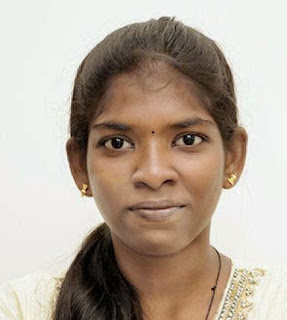
S Deepa, cello

Anish Franklin, contra bass

A Nandhini, violin

A Balaji, violin

Manoj R, contra bass

Sunshine Orchestra


